The argument in brief
- The question
- Are the media making the world sound worse than it is in order to hold our attention?
- The claim
- Social media's attention loop pushed the media towards outrage and polarisation, and a few recognisable techniques keep us engaged while leaving us confused. Asking whether they only want me to think it is worse than it is is a useful first check. Confidence: A personal view argued from observation. I cite no studies, named examples or data.
- The evidence
- My own observation of how conversations with family and friends turn tense, and of how talk panels and debates are run.
- A definition of gaslighting and a claim that its popularity rose from 2016 and peaked in 2023. The dates are my anecdotal reading of events from the Brexit vote and Trump's election to Covid, the cost of living and AI, not a measured trend.
- No studies, named outlets or counted examples.
- The best counter
- Polarisation may have causes other than platforms and the media, and the media may be serving an audience demand that already existed.
- What would change my mind
- Evidence that people who watch these formats are no more fearful or divided than those who don't, or that guests are mostly chosen for insight rather than conflict.
- Open gaps
- 2 gaps. Statements I haven't verified yet. Each is marked in the text.
The question: How do we know if the news or discussion is being misrepresented for attention, rather than for healthy discussion?It’s a common occurrence these days. Whether with family or friends, you find the conversation shifting to a politically charged topic. It’s like someone has pushed the detonation button. The mood shifts and the tension rises. Speech becomes more rapid and opinions more rigid. We’re parrots regurgitating the narrative we’ve heard, in the hope of … what exactly?
Look around and you’ll find no shortage of polarising conversations about the state of the world, the people who influence it, and the devastation that lies ahead. It’s like there’s nothing to look forward to if you accept everything you hear.
How did we get here?
Is it just that we’ve started to mature from being young and carefree, and now the political issues are suddenly relevant? But the younger generation seems more politically invested than when I was their age.
A competing explanation: Polarisation may have other causes: politics itself, the economics of news, or the outlets people choose for themselves. The media may also be serving a demand that was already there. I have not reviewed the research, so I can’t say how much social media explains.Claim, confidence:a personal view; I offer no evidence for it: Personally, I lay the responsibility at the foot of Social Media. It changed the nature of the echo chamber away from the mainstream media and into self-inflating algorithmic bubbles. The feedback loop took engagement and fed us more of it. And being fallible humans, we were drawn to the strange, the outrageous, and the ever slightly more fringe opinions.
Same 40 events, two ways of ordering them
Illustrative, not data
What happened: 40 events, newest first. 8 are alarming. Ringed squares are in the right-hand feed's first ten.
Ranked by time
- 01Ordinary
- 02Ordinary
- 03Ordinary
- 04Alarming
- 05Ordinary
- 06Ordinary
- 07Ordinary
- 08Ordinary
- 09Alarming
- 10Ordinary
Alarming in the first ten: 2 of 10
Ranked by your mix
- 01Ordinary
- 02Ordinary
- 03Ordinary
- 04Alarming
- 05Ordinary
- 06Ordinary
- 07Ordinary
- 08Ordinary
- 09Alarming
- 10Ordinary
- 11Ordinary
- 12Ordinary
- 13Alarming
- 14Ordinary
- 15Ordinary
- 16Ordinary
- 17Ordinary
- 18Alarming
- 19Ordinary
- 20Ordinary
- 21Ordinary
- 22Alarming
- 23Ordinary
- 24Ordinary
- 25Ordinary
- 26Ordinary
- 27Alarming
- 28Ordinary
- 29Ordinary
- 30Ordinary
- 31Ordinary
- 32Alarming
- 33Ordinary
- 34Ordinary
- 35Ordinary
- 36Ordinary
- 37Ordinary
- 38Alarming
- 39Ordinary
- 40Ordinary
Alarming in the first ten: 7 of 10
Describe this animation
The figure starts with a strip of 40 small squares standing for 40 events in time order, newest first. Eight of them are coral: these are the alarming ones, one in five. Below is a slider labelled "Weight on engagement", from 0% (rank by time only) to 100% (rank by engagement only), and two ranked lists of ten items.
- Left list, "Ranked by time": the ten newest events. Two of the ten are alarming.
- Right list, "Ranked by your mix": at 0% it is identical to the left list. As the slider moves towards 100%, items with more engagement (shown as a longer bar) move up and others drop out of the first ten. At 100%, seven of the first ten are alarming, although only one event in five is.
Everything here is invented, including the engagement bars. One assumption is built in: alarming events tend to draw more engagement than ordinary ones, though not every one does and some ordinary events draw a lot. That assumption is the claim in the essay, so this figure shows only what follows if it is true, not whether it is. It shows no real feed and no real numbers. The animation moves the slider from 0% to 100% once, after which you can drag it yourself.
We have now entered the engagement economy. With social media moving the attention away from the traditional media outlets, whose mere existence is under threat from dwindling viewership, they needed to adapt.
Limits: The original of this piece had a footnote here with nothing behind it. The dates are my own reading of events, not a measured trend.Unverified: 2016 sees a shift. The term gaslighting starts to enter the world consciousness with its popularity peaking in 2023.Gap · unchecked figure: These dates are anecdotal: my sense of the years from the UK vote to leave the EU and the election of an outsider, Trump, with an unconventional debating style, through Covid, the culture wars heating up, economic uncertainty and the cost of living, to AI arriving in our lifetimes. I haven't measured how the term's use changed over that time. This is no coincidence. Something is happening, and it’s happening at scale. World changing politics with the 2016 U.S. Presidential Election and the #MeToo movement grips the attention popularity contest.
Unverified: To gaslight means to deliberately manipulate someone into questioning their own memory, perception, or sanity, often by denying facts, minimising experiences, or twisting the truth.Gap · unchecked quote: I haven't recorded which dictionary or source this definition comes from, so I can't say whose words it is.
As the dynamic plays out, the mainstream media adapts. Claim, confidence:my reading of the incentives; I have not tested it: We see the rise in talk panels where we’re being told what to think and to feel outraged. In turn they gain attention, which is what feeds their existence.
Five manipulation techniques
As viewers who are susceptible to being manipulated, whether we believe we are or not, we must start to question the narrative behind the narrative.
An assumption: I am assuming these patterns are chosen to win attention, and not the result of habit, deadlines or sincere belief. From the outside I can’t see intent, so “deliberate” below is my inference.Pay attention to the tactics used by the media, which we’ll explore here.
1. False equivalence and performative “balance”
This is where both sides of a debate are equally represented, where in reality the consensus of the opposing side usually represents a small portion. By having these positioned as equivalent, it makes you, the viewer, overvalue the counterpoints. Often there will be misinformation packaged with reasonable sounding logic. This is designed to gently nudge you towards a less grounded and more extreme position.
2. Deliberate provocation and “bad-faith” debate
When guests are invited to speak on behalf of a viewpoint, they aren’t necessarily selected to provide valuable insight, but in fact Claim, confidence:inferred from how it looks; I can't see the booking decisions: are selected because they spark outrage and drama. This helps stir the pot and gets us more opinionated and heated on the topic, fuelling desire for the attention machine further.
Pay attention to the talking over, interrupting, and stonewalling. It leaves us, the poor viewers, disorientated rather than informed.
3. Normalised gaslighting language
More so than ever we’ll hear guests say things like “you’re being emotional”, or “that never happened”, or “you’re imagining things” within debates. It’s a technique used to invalidate real experience, or to reframe facts to suit a narrative.
4. Spectacle over substance
Ever felt like you’re being encouraged to pick a side rather than to critically engage with the content? It’s like watching a drama where it’s not about truth finding but entertainment and tribal loyalty. They’re charged with emotionally manipulative storytelling rather than rational and balanced discussion.
5. Psychological warfare disguised as discourse
Conversations in the media may appear to be rational debate, but in reality are designed to manipulate, confuse, exhaust, and emotionally destabilise us.
We see the onslaught of logical fallacies that aims to diffuse and confuse. These include:
- Whataboutism: shifts focus and deflects blame, or implies a hypocrisy where there isn’t one.
- Goalpost shifting: it creates a never-ending argument where facts no longer matter, only rhetorical agility. We’re left lost with no clear sense of the truth.
- Extremes to represent opposing views: puts the more reasonable party into a defensive emotional labour. It creates a toxic spectacle and paints the issue as inherently “controversial”.
- Loud voices drown out the thoughtful ones: intellectual discussion is drowned out, opening the door for emotional manipulation rather than logical conclusion.
- Misinformation through “just asking questions”: by strategically asking questions that imply some underlying scandal, it can sow the seeds of doubt and fear in the viewer.
- Selective framing: misquoting or clipping footage and creating a powerful narrative to support a misleading viewpoint. This reframing of the narrative triggers real fear, suspicion, or resentment in the viewer, bypassing rational understanding and creating emotional shock.
It’s not all doom and gloom
If you find that you’re emotionally drained and less hopeful for the future after doom scrolling your social media feed or watching the news, ask yourself this question:
What if they only want me to think it’s worse than it really is?
What would change my mind?: Evidence that people who watch these formats are no more fearful or divided than people who don’t, or that guests are mostly chosen for their insight rather than for conflict.I hope that by outlining the above you’ll start to see the tactics used by the attention hungry media.
I like to reframe this problem as a set of questions. Difficult questions to answer nonetheless, but questions that can help piece together the puzzle and find a lasting solution for the future.
My goal is to discover what creates healthy discourse, positively impacting decision making, and optimism for the future.
The questions I will start to seek an answer to are:
- How do we know if the news or discussion is being misrepresented for attention, rather than for healthy discussion?
- Are the people presenting the news or discussion acting in good faith? How can you identify if they are or not?
- Do the people presenting the news or discussion even know themselves, if they are causing more harm than good?
- What approaches can a good faith contributor add to the discussion so that balanced, truthful, and selfless goals can prevail?
- How can we, the viewer, navigate the chaos to find a more truthful, and peaceful understanding of the world’s issues?
- How can we, the viewer, share this with our friends and family so that they can step outside of the attention machine that’s sucking them in?
I hope that this post has been insightful and given you optimism for the future. If you want to explore more of this then do consider sharing the conversation so that we can continue to learn together.
Books behind this essay
Not sources for any claim here. These are books I have finished that shaped how I think about this question. Where I rely on evidence, it is cited in the text.
Critical Thinking In A Nutshell
Shaped how I think about noticing weak reasoning, which is the habit behind the list of techniques here.
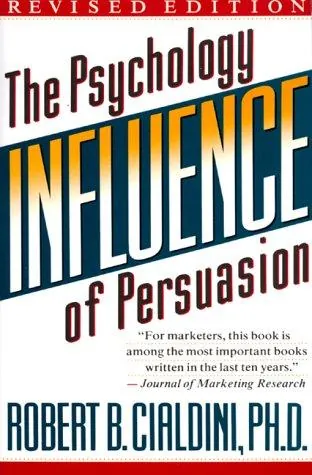
Influence (opens audible.co.uk, external site)
Shaped how I think about the psychology of persuasion, and why an appeal can work on me without my noticing.
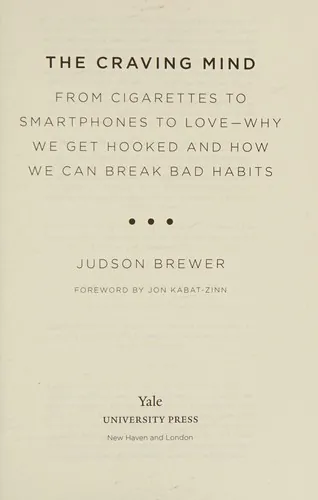
The Craving Mind (opens audible.co.uk, external site)
Shaped how I think about why we keep returning to feeds and screens that leave us feeling worse.