The argument in brief
- The question
- Why do we get motivated by a new goal and then take no steps towards it?
- The claim
- Planning, collecting resources and announcing a goal can feel enough like progress that we stop there. Small scheduled habits, less friction, intrinsic rewards, real commitment and sharing what we have made rather than what we will do help turn motivation into action. Confidence: An argument from my own experience and observation, stated firmly. No studies are cited.
- The evidence
- My own experience, and what I have observed in people I encounter, of getting motivated by a goal and not acting on it.
- A claim that the brain struggles to tell intent from achievement, and that announcing a goal gives a reward on its own. I did not cite research for either.
- No studies, data or tested comparisons of the techniques suggested.
- The best counter
- Telling people about a goal can also create accountability and support, and for some people that may be what gets them started. The difference may lie in what is shared and with whom, not in sharing itself.
- What would change my mind
- Good evidence that people who announce their goals follow through as often as, or more often than, people who keep them private or share only work in progress.
- Open gaps
- 3 gaps. Statements I haven't verified yet. Each is marked in the text.
The question: Why do we get motivated by a new goal, and then take no steps towards it?As I further explore the traits and habits that successful and happy people have, I have observed that it is not uncommon for individuals to get motivated by a new goal, but then take no steps to do it. Reflecting on my own experience and of those who I encounter, it is a perplexing and saddening affair to watch one’s dreams dissipate into nothingness.
What is it that is preventing us from working hard, developing our craft and gaining mastery of our skill? What is it that throws us off track to the point where we give up and move on to something else? Is it just bad habits? Is it laziness? Did we really want it at all, or was it all just a wish without any real commitment? Are we just being hard on ourselves, or do we just lack the confidence to accept the failures and overcome them triumphantly?
As I seek to answer this, I uncover a phenomenon called motioning, or to be in motion rather than in action.
Motion without action
Imagine you want to become a better writer. You read a few articles about writing techniques, then you find an online training course on the subject. This feels great as you’re gaining a new perspective and knowledge on the subject which you previously did not have. Your motivation peaks and you get excited, so you turn to social media to announce your new-found passion and goal: to write a book. You may even plan out a few chapters and a catchy title. You then retire for the night and feel pumped and positive. Tomorrow will be the start of your new-found path.
Morning arrives and as you wake, you slip right into your previous routine. The groggy memory of the excitement last night starts to fade. You still feel positive, but real life is calling you back to the fray. The day is tiring, and your new learning and book become passive thoughts when you have a spare moment.
The days pass, then weeks. You feel a sense of guilt that you haven’t acted on the thing you announced very proudly on social media. You regard those articles on writing as critical assets, the doorway that lights the path to your new future life once again. You’re scared to close those precious few browser tabs that keep your dream alive. You eventually close them and they are lost forever, along with your dream of being a writer.
As dramatic as this scenario may be, we all face this type of challenge. We have a spark of motivation, which is crucial to finding a new path, but we often act hastily. We are ill equipped to turn that motivation into a habit, a habit that will carry us to achieving our goal. This is motioning: all intent and no action.
An assumption: I am assuming that the good feeling from planning and announcing is what stops us, rather than ordinary competing demands on our time. I haven’t separated the two.The worst part is that Unverified: our brain is not well equipped to tell the difference between actually achieving our goal and the mere intent to achieve itGap · needs evidence: I haven't cited research showing that the brain treats an intention, or announcing it, as if the goal were achieved.. Claim, confidence:an argument from experience, not tested: The sheer fact that we broadcast our intention, collect articles and make a plan is enough for our brain to feel good, so we stop taking action. We were in motion, but yielded no action, and our brain tricked us.
The good news, however, is that this is completely normal behaviour. We are often blind to its presence, but once we recognise it, we can do something about it. So let’s explore how we can avoid the act of motioning, and start doing.
Avoid extrinsic rewards
We want to avoid relying on external validation to measure the value of our goals or actions. This means to stop announcing to the world what you’re going to do, and just do it instead. No amount of likes, replies and retweets will move you forward in your goal. Those are just vanity metrics that keep you distracted, but when it’s all said and done, hold very little value. Get no engagement and you feel deflated. Get too much engagement and you feel overwhelmed that you’ve taken on more than you can chew.
A competing explanation: Telling people about a goal can also bring accountability, encouragement and help. For some people, saying it out loud may be what gets them started. The difference may be in what we share and with whom, which the later section on promises comes back to.The real benefits come from intrinsic rewards. Focus more on the mastery of your craft. If you want to write, focus on the skill of communicating efficiently and elegantly. Only compare yourself to your previous self and never to anyone else.
Schedule your actions
It is one thing to create a plan of what to do, but it is more useful to create a plan of when to do it. We often abandon goals under the excuse of not having enough time. Yet while we are all given the same 24 hours a day, why is it that some achieve more than others? It’s not that we don’t have enough time, it’s that we never allocated our time to the actions we need to take.
Simply scheduling time doesn’t mean we’ll do it. Be realistic and start with just 5 minutes of time scheduled. A schedule creates a routine, and a routine is formed from habits. Get into the habit of just turning up.
Build on small habits
We must start small, and I mean very, almost boringly, small. For example, start with writing for 5 minutes per day, every day. Something that we can still do when the motivation fades and the willpower is gone. Writing for 5 minutes will not impact anything in our lives. We can take a special intrinsic satisfaction in doing it consistently and must protect the activity like we need to protect our ability to breathe.
Only when we are comfortable to trust that we can turn up every single day for 5 minutes can we start to expand on our actions. Get into the flow of doing the actions that will achieve our goal so that it’s frictionless to turn those 5 minutes into 10, 20 and even 60 minutes at a time. We will benefit from the compound effect of all these small habits.
Remove friction
Our physical environment can be a significant hindrance to achieving a state of flow. An assumption: Willpower coins are a metaphor. I am treating willpower as a supply that runs down through the day, and I haven’t checked what the research says about that.Imagine that during the course of a day we have a set of willpower coins. The moment something interrupts our flow (an untidy desk, a friend who dumped their daily crap on us, an unexpected telesales phone call or no milk in the fridge) we spend a willpower coin. By the end of the day, we will have used most, if not all, of our coins.
We must avoid spending our willpower coins by optimising our physical, social and spiritual environment. Clear our space, plan our meals, turn off our phones, be mindful to avoid negative conversations and meditate to clear our mind of daily stresses. With practice, we’ll be able to enter a state of flow when we carry out the actions for our goals.
Be deeply committed
We often have an image of ourselves that we wish we were. We may wish we could play the guitar, look athletic or write a book. The list is almost endless, and with a spark of motivation we may set our sights on these goals. The truth, however, is a little more harsh than we’d like to admit. More often than not, we don’t really want these things. We are interested in them, but we’re not committed.
This means we won’t give up our daily comforts and introduce new stresses and pains to get it. We don’t obsess and strive to push for every waking moment to seek it. We simply just weren’t that interested.
In order to succeed we need to pick our primary calling: what we are prepared to sacrifice our comforts for. Everything else is secondary, and we should avoid spending energy on it and focus on our one true goal.
Sometimes we may not know what that true goal is. That’s actually okay. Using small habits to keep turning up and develop our mastery, we can turn one of our interests into something we are committed to. Unverified: Experts often only become masters in their craft after years of turning up and doing the work, and not because they were passionate about it.Gap · needs evidence: This is my impression; I haven't cited evidence on how experts come to mastery, or on the role of passion in it.
Once we find our true goal, we must remove the noise that is distracting us. We need to be okay with letting go so that we can focus our energy on the actions that will help us succeed.
Why we make promises we don’t keep
Ever meet someone who says they will do something, but they just don’t follow through? Maybe you reading this are that someone. You know, where you’ll say that you’re starting a new project, but nothing happens and you’ve not done anything on it. So why do we make these promises that we don’t end up keeping?
The first part of why these promises are made is that we often feel we want to show that we’re ambitious and successful. We don’t want to disappoint others, and in some way, we want to be seen as interesting. We might even have a fear of missing out if others are busy being successful. The other part is that we’re really trying to motivate ourselves to do this thing we like the idea of, but aren’t fully committed to doing. We share these ideas of things we’re going to do in the hope that others will somehow spark the motivation to help us actually do it.
But when that doesn’t happen, when other people show a lack of interest, we start to devalue its importance. Sometimes, however, it can go the other way. They show great enthusiasm and put an increased amount of pressure on us to now do the thing we promised. Imposter syndrome kicks in, combined with guilt about not working on it. This creates a hugely negative emotion when we think of the goal. We end up actively avoiding it. We fear it coming up in conversation. It’s embarrassing and our reputation is on the line.
Another reason why we fail to take action is that we simply liked the idea of doing it, but not really the idea of putting all the work in. It just wasn’t a priority. Unverified: The act of sharing our desire was enough to give us the dopamine hit we neededGap · needs evidence: 'Dopamine hit' is my shorthand; I haven't cited research on what happens in the brain when we share a goal., and now life can carry on as normal.
We look back at all the things we failed to achieve and may see the broken promises. We see the gap between what we said we were going to do and what we actually achieved. This only makes it harder to try something new.
So if you find yourself in this situation, don’t focus on the goal and share that you’re going to do something because you like the idea of success. Focus on the actions it takes to get there. The micro action. The stupidly small tasks. Take appreciation and enjoyment in doing just the simplest thing. Great achievements happen through the sum of small actions.
What would change my mind?: Good evidence that people who announce their goals follow through as often as people who keep them private or share only what they have made.Be mindful about who you share it with. Claim, confidence:practical advice from experience, not tested: Rather than say “I’m going to do this”, share a thing you’ve learned about it instead. Rather than say “I’m going to write a book”, say “Hey, I wrote my chapter 1 outline, want to see it?”
Finally, don’t be hard on yourself. Limits: This is a broad statement about biology that I don’t support here. I mean it as a reason for kindness towards ourselves, not as a finding.At the end of the day, what we do and how we feel is mostly a result of our biological tendencies. Our brain likes to promise things even if our heart doesn’t want to see it through. If you find that you’re not doing the things you said you were going to do, don’t let that define your narrative. Be honest and say, “that strategy didn’t work”. Focus less on the outcome and more on what you do today. Let each footstep lead the way.
Create a habit of doing
Motioning, if left unchecked, means we continue a cycle of being dreamers who are perpetually waiting for something external to make our dream happen. By observing this we can recognise it and mitigate the negative effects. We can focus on small habits that allow us to develop grit, so we stick with it when motivation and willpower are at an all-time low. We can turn our attention inwards and value the mastery of our craft rather than the validation from others. We can be comfortable with letting go of the things that are noise, be patient, and create a habit of doing.
Focus less on the outcome and more on what you do today. Let each footstep lead the way.
The ah-ha moment is that we may find ourselves breaking promises about the things we said we were going to do, and it can have an impact on our self-esteem. Instead of focusing on the outcome, just focus on enjoying the actions we can take day to day, and let success emerge from our effort.
Books behind this essay
Not sources for any claim here. These are books I have finished that shaped how I think about this question. Where I rely on evidence, it is cited in the text.
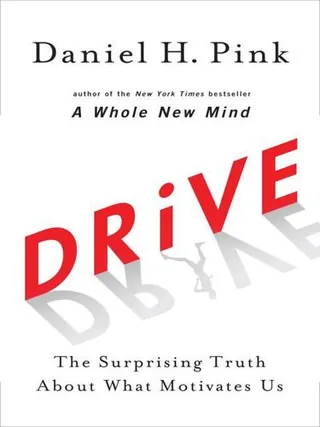
Drive (opens audible.co.uk, external site)
Shaped how I think about intrinsic rewards and mastery as better motivators than outside validation.
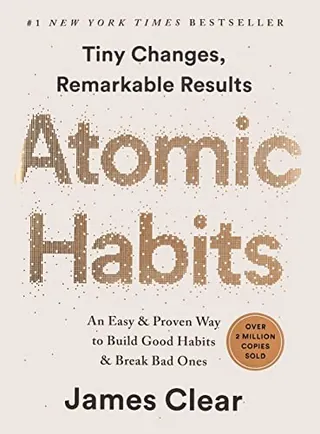
Atomic Habits (opens audible.co.uk, external site)
Shaped how I think about starting with habits so small they survive when motivation fades.
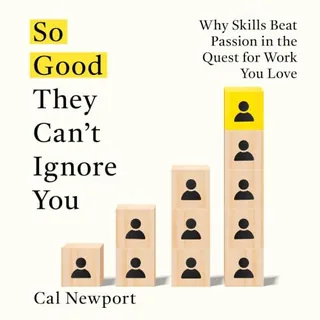
So Good They Can't Ignore You (opens audible.co.uk, external site)
Shaped how I think about commitment growing out of years of practice rather than arriving as passion first.
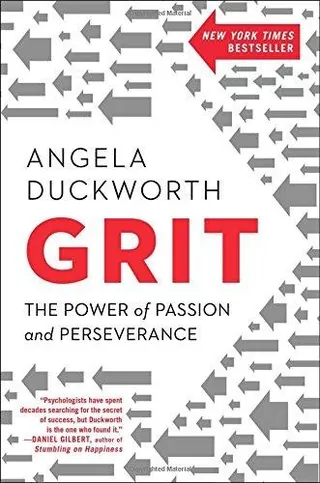
Grit (opens audible.co.uk, external site)
Shaped how I think about sticking with one goal when motivation and willpower run low.