The argument in brief
- The question
- Why hold big, open questions in mind rather than setting a specific goal?
- The claim
- Holding a few big, open “How do I…” questions gives your thinking a direction and a sense of purpose, and unlike a specific goal, the question doesn't end once you reach one answer. Confidence: A personal reflection from my own practice. No studies are cited.
- The evidence
- My own experience of keeping questions like these in mind as I work on projects, speak with people and take on opportunities.
- No studies or data.
- The best counter
- A specific goal is easier to plan for, act on and measure, and an open question can become a comfortable reason never to commit to anything.
- What would change my mind
- Finding that people who work towards specific goals end up with as much direction and purpose as people who hold open questions, or that open questions mostly lead to drifting rather than action.
The question: Why hold big, open questions in mind rather than setting a specific goal?I love asking big questions. The type of questions that make you think. The answer is often out of reach, but that’s okay. You don’t need to answer it. You just need to find the pieces of the puzzle that can help you understand what the question means.
Let me give you an example. One of my large, open questions is “How do I help people have the skills to think more critically and use that to objectively make decisions?” I don’t know the specific answer, but I know it’s a question I like to think about.
Why open questions help
Why is it useful to have these open-ended questions in the back of our minds? Firstly, it gives you something to orient your thinking towards. Like having a “why”, it provides a way to see if the pieces of insight you gain along the way fit with answering this question.
Secondly, it gives you purpose. It allows you to rest your soul onto something that has meaning.
Questions instead of goals
A competing explanation: A specific goal is easier to plan for, act on and measure. An open question can also become a comfortable reason never to commit to anything, because there is always more to explore.By setting these types of questions for yourself, you avoid the trap of setting a specific goal. For example, I could set the goal of “I want to teach people to think critically”. It’s very similar, sure. But the moment I do teach them, then what?
I feel that Claim, confidence:a personal view from my own practice: by phrasing the question as a “How do I” type of question, it doesn’t exactly have a definitive answer. I might find an answer, but I might still want to explore different or better ways that I could answer it.
Breaking a big question down
So what other questions might be helpful? I personally like tricky and specific questions that help get to the nub of the problem that would often be overlooked. Here are some examples:
- How do I stay healthy while facing the stress and challenges of my life?
- How do I build financial freedom without sacrificing my time or values?
- How do I inspire other people to use knowledge in a positive way and share the joy and fulfilment it brings?
An assumption: I’m assuming that breaking a question into smaller ones moves you closer to an answer, and doesn’t just multiply the questions. Some of these smaller questions are big questions in their own right.With these questions, you get to break down what it really means. The smaller questions might be:
- What causes stress?
- What external events change someone’s behaviour so that they avoid working towards their goals?
- What does financial freedom mean?
- How much time does someone need to feel free?
- What values should someone set for themselves?
- What does “use knowledge in a positive way” mean and how do other people interpret that?
- What does joy and fulfilment mean?
- How do you inspire other people?
Living with the questions
What would change my mind?: Finding that people who work towards specific goals end up with as much direction and purpose as people who hold open questions, or that open questions mostly lead to drifting rather than action.As I continue my own journey, speak with other people, work on my projects, and say yes to opportunities, I do it with these types of questions in my mind. I’m continually seeking to see if one will bring me closer to understanding this further, answer it better and take action on it to achieve my ultimate why.
The ah-ha moment
Ask yourself big questions. Do it in a way that allows you to seek pieces to the puzzle, and see the world through a lens with purpose and passion.
What are your big questions?
Books behind this essay
Not sources for any claim here. These are books I have finished that shaped how I think about this question. Where I rely on evidence, it is cited in the text.
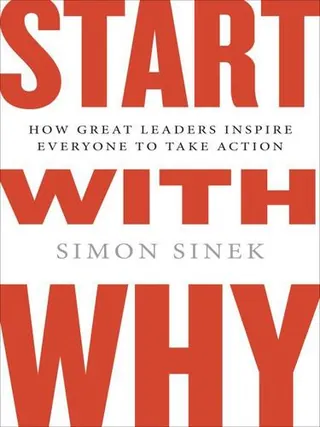
Start with Why (opens audible.co.uk, external site)
Shaped how I think about having a why to orient my work, which is the comparison I draw with big questions here.
Man's Search for Meaning (opens audible.co.uk, external site)
Shaped how I think about purpose as something to rest on, rather than a target to hit and move past.
Critical Thinking In A Nutshell
Shaped how I think about the skills behind my own example question about helping people think more critically.