The argument in brief
- The question
- How do you turn a vague sense of direction into something you can act on today?
- The claim
- A direction only helps when it is clear. Asking what skills you need to fulfil your goal, and breaking each answer down again, turns a vague why into an actionable plan you can start today. Confidence: A practical method from my own experience. No studies are cited, and I haven't tested it against other ways of planning.
- The evidence
- My own why, to inspire a generation of thinkers and doers, and how I broke it down into skills: teaching, psychology, communication, writing, video, reading and note-taking.
- My view of the problem that why responds to: division, social media, influencers and a majority of spectators. That is a personal reading of the world, not a researched one.
- No studies or data.
- The best counter
- Skills are not the only gap between a goal and action. Clarity can also come from trying things and seeing what fits, and a long chain of skills to learn first can become its own reason to delay.
- What would change my mind
- Evidence that people who start by experimenting, or by setting concrete outcome goals, make more progress towards a purpose than people who first list the skills it needs.
The question: How do you turn a vague sense of direction into something you can act on today?As you think about the future you create for yourself, it’s important that you know what you’re aiming for. Some of you will have goals for the next few years, such as getting a new job or starting a successful business. Some of you will have a larger “why” that you want to focus on, such as mentoring people to their dream job or working with innovative technology that improves the climate.
Having a direction is a great starting point. But it needs to be clear. Simply saying “I want to help people” is extremely vague and doesn’t provide any clarity on what you need to be doing now.
The question to ask
An assumption: I am assuming that what stands between a goal and action is mostly missing skills. Sometimes it is time, money, other people or simply fear, and listing skills won’t touch those.The question you must ask is: Claim, confidence:a practical method from my own experience, stated firmly: what skills do you need to fulfil your goal? By answering this, you take something vague and make it extremely actionable. It gives you something you can work on immediately. Something that helps you move towards your goal instead of standing still, wasting precious time.
My own why
Let me share my approach: what my why is and how I go about answering this question.
My why is to inspire a generation of thinkers and doers. The truth is, this is hopelessly vague, so I will qualify it with the following:
Limits: This list is my reading of the world in 2022. I cited nothing for it at the time, and I haven’t checked it against research on polarisation or social media since.These are the points that make up the problem as I see it:
- In a world where we feel more divided, Claim, confidence:a personal view from observation; I offer no evidence for it: we are seeing less and less constructive discussion that is focused on outcome, and more about “winning” the majority of opinion.
- Social media has a huge role to play in how we perceive the world and feel about ourselves.
- Influencers can use social media to amplify their agenda, which may be for the greater good, or greater harm.
- The majority of people are spectators, watching this play out as societal norms transform under the vocal few.
- To counteract this, those who have the patience, growth mindset, communication skills, moral compass and courage can help quell the chaos and restore stability and optimism.
A competing explanation: Division and loud voices are not new, and discussion may feel less constructive partly because more of it is now visible to us. The spectators may also be quieter, not passive, and doing constructive work that doesn’t show up online.Okay, this explains the problem that I want to help solve. I want to help inspire a generation of people who can tackle the greatest of problems with the right mindset, motivation and skills, and help spread this positivity for generations to come.
Breaking it down
So how will I do this? What skills do I need to develop in order to fulfil my desire to inspire a generation of thinkers and doers? At present, this is how I approach it:
- I must help teach others to be at peace with themselves, love themselves and have the courage to do things greater than themselves.
- To help someone be at peace with themself, I must become a better teacher, understand the deeper mechanics of psychology and combine this with an understanding of biology and spirituality.
- To help someone become a better thinker and doer, I must teach the dynamics of communication, critical thinking, knowledge management and so on.
- To become a better teacher I must understand learning and teaching models and combine this with great storytelling.
- To tell stories I must become a better writer and a better video producer.
- To gain deep understanding and insight into the subjects I teach, I must become a better reader, note-taker and thinker.
- To help people with my teaching, I must learn how to find those who align with my why.
- To do that, I can create content that helps me practise my skills, all while starting my journey of helping inspire a generation of thinkers and doers.
A competing explanation: A chain this long can become a reason to delay: there is always one more skill to learn before starting. Trying things first, and seeing what works, is another route to clarity.So you can see, this is a continual breakdown of the “what I want to do” into the “how I can do it”. Now I have an actionable plan which I can start today.
My path, not the only one
And a small caveat. This is not the only path to achieving this goal. This is my path, filled with my own passions and areas of interest. I’m curious to link psychology with biology and spirituality. That may not be for everyone, but it’s enough for me to gain some amazing skills to explore and bring me closer in the direction of my why.
And this is also why I’m building my own note-taking app: to create a business that helps fuel this greater why. A business that contributes to the heart of helping you think better and take better actions. I also believe that as I learn these skills, I continue to see the gap that helps my note-taking app be transformational compared to any other note-taking app out there.
What would change my mind?: Evidence that people who start by experimenting, or by setting concrete outcome goals, get further towards a purpose than people who first list the skills it needs.What skills do you need to fulfil your goal?
Books behind this essay
Not sources for any claim here. These are books I have finished that shaped how I think about this question. Where I rely on evidence, it is cited in the text.
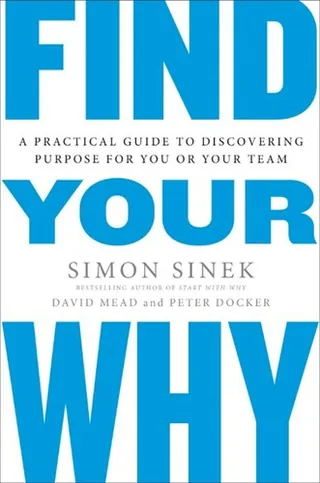
Find Your Why (opens audible.co.uk, external site)
Shaped how I think about putting a personal why into words, and how vague the first attempt usually is.
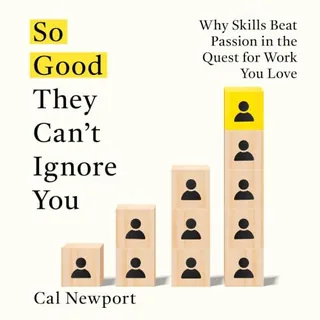
So Good They Can't Ignore You (opens audible.co.uk, external site)
Shaped how I think about building skills as the route towards meaningful work, rather than waiting for passion to show the way.
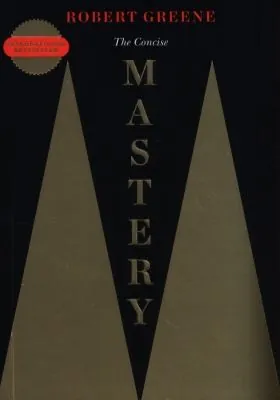
Mastery (opens audible.co.uk, external site)
Shaped how I think about the long apprenticeship of skills that sits behind any larger ambition.
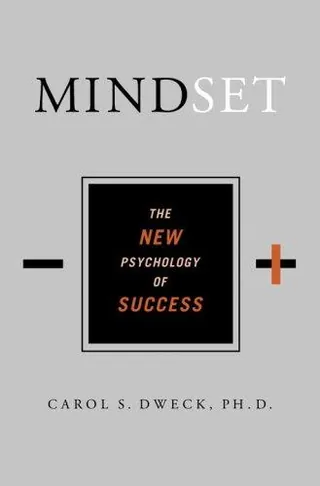
Mindset (opens audible.co.uk, external site)
Shaped how I think about the growth mindset I name as one of the qualities that can restore stability and optimism.