The argument in brief
- The question
- Why do the people I mentor so rarely do the first small task we agree, and what is that task really for?
- The claim
- The point of a mentoring task is not to complete it but to gain the skills that trying it gives you. Being in motion is what lets you act when an opportunity appears, and getting someone from stationary to moving is the hardest part of mentoring. Confidence: A personal view from my own mentoring and my own story, told in hindsight. No studies are cited.
- The evidence
- My experience mentoring students and professionals, where the agreed first task is almost always left undone.
- One chain of events in my own life: a reply on Twitter led to a one-tweet summary, two YouTube videos, a university seminar and, by March 2025, a book and course that had sold over $35K.
- No studies, and no comparison with people who acted just as much and saw nothing come of it.
- The best counter
- People may not act because the task was wrong for them, or because time, money or fear genuinely stand in the way. And my own story may owe more to timing and luck than to being in motion.
- What would change my mind
- If people who regularly try small tasks turn out to be no better at spotting and acting on opportunities than people who don't, or if a different mentoring approach reliably gets stationary people moving without small tasks.
The elephant in the room
The question: Why do the people I mentor so rarely do the first small task we agree, and what is that task really for?Over the years I’ve been a mentor to a variety of people. Some are students at university and others are professionals who are in a very similar stage of life to me. I love doing it. I’m not exactly sure why, but I have this inner desire to help people course correct their future and have a compounding effect on their happiness and impact.
But there’s an elephant in the room. I’m yet to find a method that really creates lasting change for those I am helping. Maybe I’m just bad at it, but I also feel there is something else at play.
When mentoring, I often want to find out how I can help my mentee. We discuss what they’re struggling with and what they want for their future. Sometimes they don’t know what they want and we try to figure that out. As the conversation unfolds, we start to form a path to get them to where they want to be going, then break this down into a starting task that they can carry out over the next couple of weeks.
Such tasks might be to write a blog post sharing their skills in a particular area, something very powerful if you’re looking for a job. Or it might be putting their experience together in a portfolio, or recording a video to share their expertise or passions. You know, something to start doing to dip a toe in the water.
Almost always, they don’t do the task
A competing explanation: Some people may not act because the task was wrong for them, or because time, money, health or fear genuinely stand in the way. “I didn’t have the time” can be true.Yet, almost always, they don’t do the task. “Oh, I didn’t have the time”, or “I thought about it, but I wanted to solve these other problems first”, or “I’ve got a lot going on, I’ll need to wait until the time is right.”
It’s a common pattern. And I think it is the biggest single hurdle I need to figure out to truly help someone achieve the happiness and success they deserve.
An assumption: I’m assuming that not acting mostly reveals what someone really wants. It might instead reveal fear of failing, or not knowing how to start, which is a different problem.What I keep coming back to is this feeling that Claim, confidence:a personal conviction from mentoring; I haven't tested it: your words are not your decisions, your actions are. It makes me think that what we discussed was off the mark and you really didn’t want to follow it. After all, if it was something that really fired you up, you’d obsess about it enough that you’d do the task.
I often think that my mentoring style is best suited for people who are already in motion, not for those who struggle to get in motion. I find when you’re starting out, there’s a lack of willingness to fail, unless failing to try counts.
Trying is the point
Claim, confidence:a working hypothesis from my own experience: the task I set is not about completing the task. It’s about gaining the skills that trying the task gives you. Want to start a YouTube channel? Then record yourself on camera. Want to have a killer portfolio? Then start by creating a rubbish one. Everything can be improved incrementally, and as you do it more and more, you gain the skills you need for it to become effortless.
There is another aspect of just doing it. When you’re in motion as a doer, you find yourself in places you never imagined possible. For example, by March 2025 my YouTube channel was closing in on 14K subscribers, with 1.4 million views. I didn’t plan to do this. I followed the inspiration and took action.
A rabbit hole of events
The success of my channel came from serendipity, through a conversation on Twitter (before it was X). I had a pinned tweet about the Zettelkasten note-taking method and someone asked about it. I took the muse and said “I totally need a one tweet summary for this. Let me create something and get back to you.” Then I followed up with an image summing up the method.
But this wasn’t enough. I felt that I needed a video to explain the image, so I created a YouTube video on the topic. After creating this video, I felt it needed some more examples to work with, so I followed up with another YouTube video. None of these were planned. It just made sense at the time, and I had the skills to action it. By March 2025 those two videos had performed quite well, with a combined 640,000 views, 16,000 likes and 360 comments.
But it didn’t stop there. Through this YouTube channel I was approached to give a seminar teaching the Zettelkasten note-taking method to PhD students. This was at Queen Mary University of London, for their Artificial Intelligence and Music centre, and I am very proud to have had a payslip as an employee of the university for just one day!
You’d think that would be enough. I followed my muse here too and felt I wanted to have something to give the students at the end. While I didn’t quite accomplish this, it sparked my journey to write Atomic Note-Taking, a 268-page book going from zero to hero in the Zettelkasten method. And while I could just sell a book, I wanted to offer a video course, which ended up being 9.5 hours long and accounted for 66% of the revenue. By March 2025 the book and course had sold over $35K, to over 700 customers in 70 countries across the world.
Think about that. All this came from a tweet replying to someone who was asking questions.
One reply on Twitter, and what it led to
A question on my pinned tweet
Someone asked about my pinned tweet on the Zettelkasten note-taking method. I replied that I needed a one-tweet summary for it.
A one-tweet summary
I followed up with an image summing up the method.
FleetingLiteraturePermanent Made possible by graphic design
A YouTube video explaining the image
The image needed a video to explain it.
Made possible by video creation
A second video, with examples
The first video needed more examples to work with.
640,000 views16,000 likes360 commentsThe two videos combined, by March 2025
Made possible by video creation
A seminar for PhD students
Through the channel I was approached to teach the method to PhD students at Queen Mary University of London, for its Artificial Intelligence and Music centre.
Atomic Note-Taking, a 268-page book
Wanting something to give the students sparked the book, going from zero to hero in the Zettelkasten method.
Made possible by writing
A 9.5-hour video course
Alongside the book, a video course, which accounted for 66% of the revenue.
Made possible by video creation
Sales around the world
The book and course together, by March 2025.
Over $35KOver 700 customers70 countries
Step 8 of 8
Describe this animation
A numbered chain of eight steps, read from top to bottom, joined by a line. You can walk it with Previous and Next, or jump to a step by its number; steps further along the chain stay dimmed until you reach them. The animation walks the chain once on its own.
- A question on my pinned tweet: someone asked about my pinned tweet on the Zettelkasten note-taking method, and I replied that I needed a one-tweet summary for it.
- A one-tweet summary: I followed up with an image summing up the method, shown as a small sketch of three stacks of cards, fleeting notes, literature notes and permanent notes, joined by arrows. Made possible by graphic design.
- A YouTube video explaining the image. Made possible by video creation.
- A second video, with more examples. Made possible by video creation. By March 2025 the two videos had a combined 640,000 views, 16,000 likes and 360 comments.
- A seminar: through the channel I was approached to teach the method to PhD students at Queen Mary University of London, for its Artificial Intelligence and Music centre.
- Atomic Note-Taking, a 268-page book, sparked by wanting something to give the students. Made possible by writing.
- A 9.5-hour video course, which accounted for 66% of the revenue. Made possible by video creation.
- By March 2025 the book and course had sold over $35K, to over 700 customers in 70 countries.
The facts and figures are the ones in the essay. The skills are from the list I give in the essay (building, writing, video creation, blogging, graphic design); which skill goes with which step is my reading, and steps with no named skill show none.
Bringing it back to mentoring
Limits: This is one chain of events, told in hindsight by the person it worked out for. I can’t see the people who acted just as much and saw nothing come of it, and timing and luck surely played a part.I appreciate this is quite a rabbit hole of events, but bringing this back to mentoring, Claim, confidence:my reading of my own story; one case, in hindsight: I could only do this because I knew how to be in motion. I knew how to take action when the opportunity struck. That comes from the 10,000 hours I put in over the years doing stuff: building, writing, video creation, blogging, graphic design and more.
So when I ask you to do a simple task, it’s to help you get in motion. It’s to help you have the skills where the act of doing is almost no effort. It’s so you can get into the flow of creating and then capitalise on the opportunity in front of you.
The task I set is not about completing the task. It’s about getting you in motion.
From stationary to moving
What would change my mind?: If people who regularly try small tasks turn out to be no better at spotting and acting on opportunities than people who don’t, or if another approach reliably gets stationary people moving without them.But alas, the biggest challenge is getting you in motion from being stationary. If you know how to solve that, I’d love to hear from you.
And if you want to know why I wrote this, it’s because Lee McLaren took the time to ask me and I shared my thoughts. And then I thought, this should be a blog post. I had the skills to be in motion, and here we are.
Books behind this essay
Not sources for any claim here. These are books I have finished that shaped how I think about this question. Where I rely on evidence, it is cited in the text.
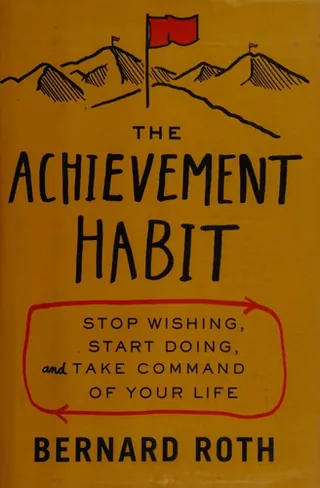
The Achievement Habit (opens audible.co.uk, external site)
Shaped how I think about the gap between saying we want something and actually doing it.
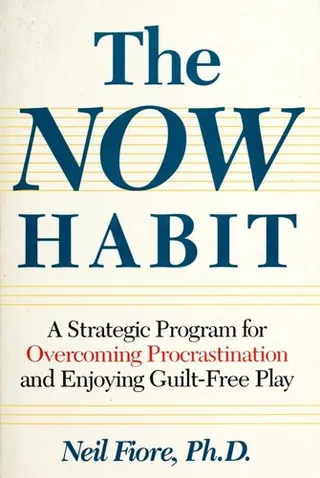
The Now Habit (opens audible.co.uk, external site)
Shaped how I think about why people put off a first step, and why that isn't simply laziness.
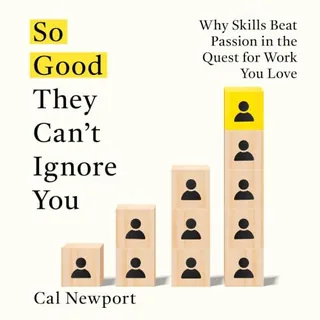
So Good They Can't Ignore You (opens audible.co.uk, external site)
Shaped how I think about skills built through practice as what makes opportunities usable.
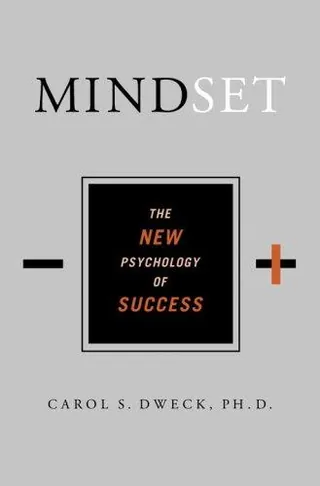
Mindset (opens audible.co.uk, external site)
Shaped how I think about being willing to fail at the start as part of getting better.