The argument in brief
- The question
- If it feels as if everything has been said before, how can the rest of us still have original ideas?
- The claim
- Original ideas don't have to come from the frontier. Like DNA, ideas can be combined from two parents or deliberately and accidentally mutated, and doing this is a usable way to evolve your own thinking. Confidence: A working hypothesis argued by analogy with biology and illustrated with my own examples. No studies of creativity are cited.
- The evidence
- An analogy with how evolution produces variation, through recombining DNA from two parents and through mutation. I describe the biology in simple terms and cite no biology source.
- Three worked examples of my own (spaced repetition in games, mutating a list of selling tips, and a chain of thought about 'mindset'). They show the method can produce ideas, not that the ideas are good.
- An observation about how similar cars are across manufacturers, and that the first practical car dates from 1886.
- The best counter
- Evolution needs selection as well as variation, and combining or mutating ideas produces far more bad ideas than good ones. Some original ideas may also come from new observations rather than from recombining old ideas.
- What would change my mind
- Evidence that people who deliberately combine and mutate existing ideas come up with no more useful original ideas than people who don't, or that the ideas widely judged original mostly arose some other way.
- Open gaps
- 2 gaps. Statements I haven't verified yet. Each is marked in the text.
The question: If it feels as if everything has been said before, how can the rest of us still have original ideas?Sometimes it feels like everything has been said before. Is it just the pioneers who have original thoughts, as they are at the forefront of research and science? Is there room left for the rest of us to have original ideas?
A look at biology
Biology has given us a great insight into how you can evolve something into something completely original. When it comes to evolution, it does this very well. It uses two primary techniques to create original offspring.
The first technique is to use DNA from two parents and merge them. Unverified: This creates variations on the active genes in the offspring and improves the chances of survival by distributing the stronger genes across the species.Gap · needs evidence: This is my simplified description of the biology. I haven't checked it against a biology source, and 'distributing the stronger genes' may overstate what recombination does.
The second is to create a number of random changes, mutations as we call them. Sometimes they have no observable impact, sometimes they are detrimental, but sometimes they create a superior offspring.
It is reasonable to say that the human species is far more original than the first single-celled organisms from which it descends.
The DNA of ideas
An assumption: I am assuming the analogy holds: that ideas pass on, mix and change in a way close enough to genes for the biology to be a useful guide. It is an analogy, not evidence.Claim, confidence:working hypothesis, argued by analogy: Ideas are no different. Consider that each idea has a “DNA”: the information it represents. When we merely copy someone else’s idea, we aren’t adding anything original.
But what if we applied the same rules from biology to introduce variations and mutations to create something original? Let’s see how this plays out for the two main techniques above.
Combining ideas
Sometimes originality happens when you combine two ideas together and you discover something new. Unverified: This is known as information synthesisingGap · needs evidence: I haven't found where this term comes from or checked that it is used this way., as we are intentionally making new ideas from the original.
Let’s try an example with these two parent ideas:
- The use of spaced repetition to allow someone to store memories optimally by applying a spacing to exposure to the information.Source: A meta-analysis of 317 experiments on spacing out study. It found spacing helps retention and that the best gap between sessions grows with how long you need to remember. It covers verbal recall tasks, such as word lists, not games.Distributed practice in verbal recall tasks: A review and quantitative synthesis, Nicholas J. Cepeda, Harold Pashler, Edward Vul, John T. Wixted and Doug Rohrer, Psychological Bulletin, 2006
- Video games need instructional tutorials to teach the game mechanics before someone can play the game effectively.
By combining these two ideas, you can start to see an opportunity to create something original. The new idea might be:
- The use of spaced repetition to reintroduce in-game challenges to help the player learn the game mechanics, so they get the maximum memory recall, resulting in enjoyment without frustration.
Mutating ideas
Like DNA, we can introduce deliberate mutations. You can use a variety of methods to create these mutations. For example:
- Deliberate mutations, by deconstructing the components of the idea and removing, rearranging, adding or changing individual components.
- Accidental mutations, by allowing your mind to wander, misinterpret or go off on tangents.
Deliberate mutations
Here we want to break the idea down into its component parts. Let’s work through an example around the 5 points to effective selling:
- Sell yourself first
- Listen more than you talk
- Know who to sell to
- Understand what motivates the prospect
- Keep it simple
So what happens if we start to mutate this list deliberately? Maybe it’ll work, maybe it won’t. Let’s give it a try.
- Sell yourself first → what about testimonial-based selling, where you’re selling someone else?
- Listen more than you talk → Sounds simple, but why listen? What if you got your prospect to draw their situation? Why do you need to talk? What if you did a pure visual demo?
- Know who to sell to → Easy to say, but you need to find them to sell to them. What if you deliberately don’t know, but use the wrong contacts as a stepping stone by getting them to point you in the right direction?
- Understand what motivates your prospect → What about going in completely blank, with no clue what motivates them, then using the listening technique above to figure it out on the fly?
- Keep it simple → Are there scenarios where keeping it complex is advantageous? What if you could get your prospect to feel super smart by understanding something complex?
A competing explanation: Evolution doesn’t only vary; it selects, and most mutations fail. Combining and mutating ideas will throw up far more bad ideas than good ones, so the hard part may be judging which to keep, which this method doesn’t do for you.As you can see, by tweaking these components we can start to challenge our ideas and go down different paths. Some might be failures, but some might not.
Accidental mutations
Sometimes you might have completely unrelated ideas sparked off the original idea. I frequently do this in my reading, where the topic sometimes allows my mind to jump to something unrelated. I’ll record this fleeting note there in the moment and move on. Often this is related to a current problem I am facing, and the book can spark some line of thinking related to that problem.
Other times, new ideas can come from a lack of understanding, or a misinterpretation. If I don’t understand something, I often use literal or visual ideas to try and comprehend it.
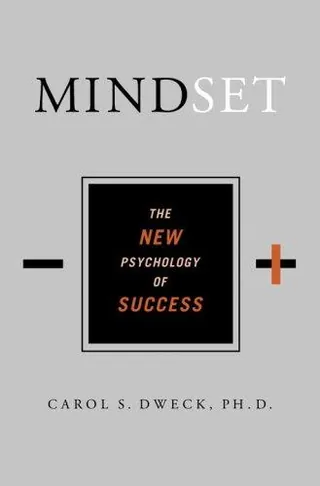
Let’s say I’m reading something about “mindset”. Here’s how my mind might jump around from this idea:
- Visually think of the word “mindset”, like setting concrete, and your mind is fixed in place.
- What would it mean to have a changeable mindset when it’s fixed in place?
- Would that be the “thawing” process to melt the concrete to free your mind?
- Can you do that forcefully, like with a hammer, or subtly, like turning up the temperature?
- So now I’m left with the idea that you cannot just change someone’s mindset, but you must first free it from the concrete that fixes it in place, and that takes time and patience without being forceful. You need to gradually thaw the concrete bit by bit.
Limits: These examples show the method producing ideas. I haven’t tested whether any of them, such as the spaced-repetition game or the selling variations, would actually work.You can see how, by having a simple idea, you can add a few mutations which can lead you to some really interesting and curious paths to come up with truly original ideas.
Putting it into practice
My interest: I teach this method in videos and sell a book built on it. The disclosure at the end says more; combining and mutating ideas doesn’t depend on any one note-taking system.I highly recommend the Zettelkasten note-taking method to record your ideas as atomic notes (one idea per note). This allows you to link your ideas together and build a highly malleable set of thinking. You can create your own original ideas by combining existing notes or by mutating them.
If you would like to learn more about the Zettelkasten method, I have a range of videos teaching it in depth.
Where the idea came from
For the curious, the idea for this piece came about when I was walking alongside a road and observing how all cars are almost identical in how they work (wheels, steering, doors, shape), yet they are from different manufacturers, designers and engineers.
I wondered how the DNA of what makes a car was preserved over the last 130 years.Source: Says the Benz Patent-Motorwagen, patented in 1886, is widely regarded as the first practical automobile, which makes cars about 136 years old when I wrote this. An encyclopedia summary, not a primary source.Benz Patent-Motorwagen, Wikipedia, accessed 26 October 2026 It’s not like cars breed to pass on their DNA.
But it’s the ideas that are conveyed in the car’s DNA. They are copied, mutated, combined and challenged. And that’s what they are: ideas. Ideas in the form of design, inventions and convention.
What would change my mind?: Evidence that people who deliberately combine and mutate existing ideas come up with no more useful original ideas than people who don’t, or that the ideas we call original mostly arose some other way, such as from new observations.Claim, confidence:my conclusion; it holds as far as the analogy does: The way we come up with original ideas is the same. We stand on the shoulders of giants who have come before us, and we evolve their ideas. One idea at a time.
Sources
- Distributed practice in verbal recall tasks: A review and quantitative synthesis, Nicholas J. Cepeda, Harold Pashler, Edward Vul, John T. Wixted and Doug Rohrer, Psychological Bulletin, 2006
- Benz Patent-Motorwagen, Wikipedia, accessed 26 October 2026
Books behind this essay
Not sources for any claim here. These are books I have finished that shaped how I think about this question. Where I rely on evidence, it is cited in the text.
The Innovator's DNA (opens audible.co.uk, external site)
Shaped how I think about new ideas coming from connecting things that seem unrelated.
Originals (opens audible.co.uk, external site)
Shaped how I think about originality as something ordinary people can practise, not only pioneers.
Range (opens audible.co.uk, external site)
Shaped how I think about borrowing ideas from one field to use in another.
How We Learn (opens audible.co.uk, external site)
Shaped how I think about spaced repetition, the first parent idea in my combining example.
Mindset (opens audible.co.uk, external site)
Shaped how I think about fixed and changeable mindsets, the idea my mind wanders from in the last example.