The argument in brief
- The question
- How do you apply the Zettelkasten idea of one note per idea when you are taking notes on a whole book?
- The claim
- Keep a book's highlights in one fleeting note, take each idea out of it into its own literature note written in your own words, then move those into your slip-box as permanent notes, linking each step back to the one before so you can always trace an idea to its source. Confidence: A practical method from my own note-taking, illustrated with my own example notes. I have not tested it against other ways of working.
- The evidence
- My own workflow with the Kindle app and LiquidText, and three example notes I wrote from How to Teach Anything by Peter Hollins.
- The Zettelkasten principle of one idea per note, as described in the introduction on zettelkasten.de.
- No studies of whether this workflow improves understanding or recall.
- The best counter
- Sönke Ahrens, whose book popularised these note types, uses the terms differently: fleeting notes are discarded within a day or two, and the effort goes into permanent notes. The extra literature-note step may add work without adding understanding.
- What would change my mind
- Evidence that people who write permanent notes straight from their highlights understand and reuse ideas as well as people who go through a separate literature-note step, or that the audit trail is rarely used in practice.
The question: How do you keep one note per idea when a single book is full of ideas?You’re reading a book and you’re applying the Zettelkasten note-taking method to capture what you learn in your slip-box. However, you are struggling to grasp the “one note per idea” philosophy of the Zettelkasten when it comes to literature notes and the entire contents of a book. What do you do?
Fleeting notes and literature notes
The first way to approach this is to remind ourselves of the roles of a fleeting note and a literature note when using the Zettelkasten note-taking method.
Fleeting notes
A fleeting note is a temporary, raw capture of what comes to mind or what you have seen (quotes, excerpts, ideas).
A competing explanation: I use the terms more loosely than Sönke Ahrens, whose How to Take Smart Notes popularised them. In his account fleeting notes are quick jottings, turned into other notes and thrown away within a day or two, and literature notes are short records kept with the reference. My long fleeting note per book is closer to an archive of highlights, and you may find his lighter approach saves time.When reading a book, I create one long fleeting note which contains my highlights and annotations.Source: A close reading of Ahrens’s note categories. It describes fleeting notes as temporary, recast as literature notes or permanent notes and discarded, ideally within a day or two, and literature notes as a kind of permanent note tied to a reference. It is one reader’s interpretation of the book, published after my original post.From Fleeting Notes to Project Notes: Concepts of How to Take Smart Notes by Sönke Ahrens, F. Lengyel, guest post on zettelkasten.de, 10 February 2022 The Kindle app allows me to capture highlights with annotations, which can be exported as a fleeting note for the book. Other apps, like LiquidText on the iPad, allow me to extract content from a PDF and organise it on a workspace.
The fleeting note can reference the original material, whether it’s a book, article, video or something else. This allows you to trace back to where you originally captured the information, in case you find that your understanding wasn’t correct and you need to review the source material again.
Literature notes
A literature note is where you take individual concepts from your fleeting note and extract the core idea of one of those concepts into a single note. It is written in your own words, and that shows you have understood the idea conveyed. You will end up creating many literature notes from a single fleeting note.
An assumption: I am assuming a book’s ideas can be separated cleanly. Some arguments only make sense as a chain, and splitting them too finely can lose the thread that joined them.It is important that a literature note follows some simple rules. Claim, confidence:a practical rule from my own note-taking, consistent with the Zettelkasten principle of atomicity: A literature note should be a single idea, it should be understandable in isolation, and it should represent your own understanding rather than a paraphrase of someone else’s words (with the exception of quotes).Source: Sets out the Principle of Atomicity, one knowledge building block per note, and recommends limiting each note to one thought. It calls this a guiding direction rather than a strict rule, and does not use the terms fleeting or literature note.Introduction to the Zettelkasten Method, Sascha Fast, zettelkasten.de, 27 October 2020
How to create literature notes
Take a single point or idea from your fleeting note and articulate it in your own words. For example, in the book How to Teach Anything by Peter Hollins, I highlighted a few passages about the Socratic Method. From these, I would create two distinct literature notes as follows.
# The Socratic Method
#type/literature

Is a method of understanding where you ask many questions through the form of a dialogue to dissect an assertion or statement.

## References

1. [[Fleeting Notes/How to Teach Anything]]
# Probing questions using the Socratic Method
#type/literature
When using the Socratic Method to probe for understanding, it can come across as offensive to the person you are asking questions to. Be mindful of this and let the other person know that your intention is to help both parties learn and discover. Try to avoid opinion in such questions and always approach it from a point of view to learn.
## References
1. [[Literature Notes/The Socratic Method]]
2. [[Fleeting Notes/How to Teach Anything]]Looking at these, I have two separate notes, each distinct and conveying its own meaning in isolation. One helps to define the Socratic Method; the other gives an insight into how to use it.
During this process, I may have new ideas which I want to capture at the same time. One of those is from a personal experience of how I have benefited from this method in negotiation with colleagues. I can add an additional note to capture this.
# Negotiating with the Socratic Method
#type/literature

When having discussions with colleagues about how to solve a problem, I often felt that I had an insight that the other person hadn't considered and needed to negotiate an appropriate solution. It can be difficult to get them to consider my solution as they are fixed on their way of solving the problem.

By using probing questions I often uncover the further problems their solution has, but open it up for the other person to come up with a better solution.

The nature of my questions can guide the other person to a solution that closely aligns with my desired solution. This is done via logical reasoning and deduction on their part.

They will be more accepting of the final solution as they feel it was their idea, even though you navigated them to it via selective questioning.

While you won't get credit per se, you will play a pivotal role in helping the overall project proceed.

If your solution is not the better solution, the questioning should uncover where your idea was limited, and you can thus learn and agree with their better solution.

## References

1. [[Literature Notes/The Socratic Method]]
Referencing the original material
For simplicity, in the examples above I have only shown reference links to the original fleeting note. Depending on the software you use to write your notes, you may be able to deep link into the specific section of the fleeting note on which you have based the literature note.
The fleeting note may also contain a deep link into the original material (a YouTube video timestamp, a Kindle book chapter position), depending on how you have recorded it. This gives a full audit trail from your literature note right back to the original material.
Adding a map of content
What is extremely useful when organising literature notes is to add a map of content for the book. Here is an example based on the three notes above. A final map of content would contain many more references to literature notes.
# How to Teach Anything
#type/moc

1 [[The Socratic Method]]
1.1 [[Probing questions using the Socratic Method]]
1.2 [[Negotiating with the Socratic Method]]
From literature notes to permanent notes
When you have completed your literature notes, you can go through each one and consider:
- Does it add any new insight or thinking to what you have already?
- Does it change any of your understanding of any existing notes?
- Are there any related notes that this new note adds more insight to if you link it to them?
Remember, permanent notes move the literature note from the context of a single source (a book, say) into your whole collection of knowledge, from all books, articles and so on. Like a jigsaw puzzle, you are taking this new piece and slotting it in where it fits.
Should you copy or move the note?
Limits: This is a lot of steps per idea, and I haven’t measured how much time it takes or whether it helps me remember more than a simpler workflow would. It is a description of what I do, not a tested method.I would personally make a copy of the note into my slip-box as a permanent note and archive the original literature note. To archive it, I would either move it to a separate folder or add a hashtag, #archived. This makes it easier to filter them out of view, but keeps them as an audit trail back to the source material.
Linking the permanent note back
In the references section of the permanent note, add a link to the literature note it came from. Sometimes the notes will look exactly the same, and other times you’ll add more internal references to other notes in your slip-box, or update the text to consider more based on your overall understanding.
Claim, confidence:a practical argument from my own use; I have not tracked how often I actually trace notes back: The value in making this link is that you can always navigate from your permanent note to the literature note, then from the literature note to the fleeting note, then from the fleeting note to the original source material. This means that if you find a permanent note no longer makes sense in the future (for example, you find new information that contradicts it), you can trace back to the original source to check your interpretation of the text or the credibility of the original argument.
From a book’s highlights to the slip-box, and back
Select any note to follow its references back to the source.
Source
Fleeting note
Literature notes
Slip-box
Audit trail following each note’s references back
- Permanent note: Probing questions using the Socratic Method
- Literature note: Probing questions using the Socratic Method
- Fleeting note: How to Teach Anything and Literature note: The Socratic Method
- Source: How to Teach Anything (the book)
Describe this animation
Four stages, left to right on a wide screen and top to bottom on a narrow one, using the example notes from this article.
- Stage 1, Source: the book How to Teach Anything by Peter Hollins.
- Stage 2, Fleeting note: one long note called How to Teach Anything, holding my highlights and annotations exported from the Kindle app. It references the book with a deep link to the position in it.
- Stage 3, Literature notes, each tagged #type/literature: "The Socratic Method", which defines the method and references the fleeting note; "Probing questions using the Socratic Method", on how to use it, which references "The Socratic Method" and the fleeting note; and "Negotiating with the Socratic Method", a new idea from my own experience of negotiating with colleagues, which references "The Socratic Method". Below them, a map of content called How to Teach Anything, tagged #type/moc, lists them as 1, 1.1 and 1.2.
- Stage 4, Slip-box: each literature note is copied in as a permanent note with the same title, which references the literature note it came from and can also link to related notes already in the slip-box (shown unnamed). The original literature notes are tagged #archived.
Each note can be selected. Selecting one highlights the notes its references lead back to and lists them as an audit trail. For example, the permanent note "Probing questions using the Socratic Method" leads to the literature note of the same name, then to the literature note "The Socratic Method" and the fleeting note, then to the book. The permanent note "Negotiating with the Socratic Method" leads to its literature note, then "The Socratic Method", then the fleeting note, then the book. Every path ends at the source.
In the animation the stages appear one after another: the book, then the fleeting note filling with highlights, then the literature notes one by one and the map of content, then the permanent notes as the literature notes are archived. Finally the trail from the permanent note "Probing questions using the Socratic Method" lights up one step at a time, back to the book.
In short
What would change my mind?: Evidence that people who write permanent notes straight from their highlights understand and reuse ideas as well as those who add a separate literature-note step, or that the trail back to the source is rarely used.So this has been a walk-through of how to make your literature notes a single idea, where they come from, and what to do with them once they have been created.
Sources
- From Fleeting Notes to Project Notes: Concepts of How to Take Smart Notes by Sönke Ahrens, F. Lengyel, guest post on zettelkasten.de, 10 February 2022
- Introduction to the Zettelkasten Method, Sascha Fast, zettelkasten.de, 27 October 2020
Books behind this essay
Not sources for any claim here. These are books I have finished that shaped how I think about this question. Where I rely on evidence, it is cited in the text.
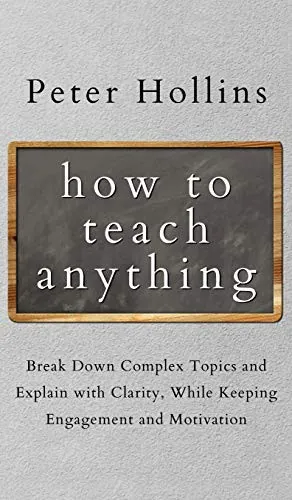
How to Teach Anything (opens audible.co.uk, external site)
The book the example notes come from, and it shaped how I think about questioning as a way to understand.
Building a Second Brain
Shaped how I think about capturing from what I read and then distilling it into something I can use.
How We Learn (opens audible.co.uk, external site)
Shaped how I think about returning to material and re-expressing it as part of learning it.
The Lifelong Learner (opens audible.co.uk, external site)
Shaped how I think about learning on my own from books, which is the setting this workflow is for.