The argument in brief
- The question
- What makes some people stick with an idea through the hard part, when most give up?
- The claim
- Many people give up too soon. Grit, a combination of perseverance and passion, is what gets people through the dip, and the passion that matters is endurance over the long term rather than enthusiasm. Confidence: A personal reflection drawn from what I have observed and from two books. The research on grit is more mixed than the piece suggests.
- The evidence
- My own observation of people who start an idea, have some success and then quit.
- Angela Duckworth's 2007 paper, which defines grit as perseverance and passion for long-term goals and found it explained a small share (about 4%) of the variance in success outcomes.
- Seth Godin's idea of the dip, given here as my own summary of his book.
- The best counter
- A 2017 meta-analysis found grit only moderately related to performance, very strongly related to conscientiousness, and that perseverance predicts better than consistency of interest. Some people who quit are also right to: not every dip is worth getting through.
- What would change my mind
- Evidence that people who persist through a long, unrewarding stretch do no better than people who switch to something new, or that passion for a field rarely grows as skill grows.
- Open gaps
- 3 gaps. Statements I haven't verified yet. Each is marked in the text.
The question: What makes some people stick with an idea through the hard part, when most give up?I’ve seen too many people give up too soon. They have a great idea, start it, and in some cases have moderate success. But then it flatlines. They fail to keep applying the pressure and ultimately quit. They lack grit.
What makes you gritty?
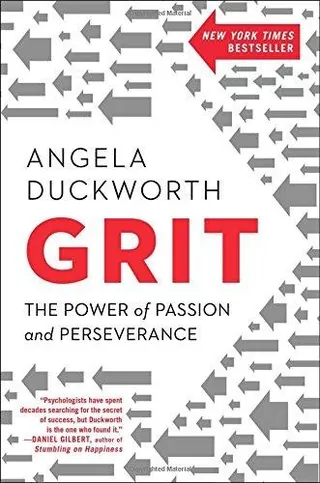
Grit is the trait popularised by Angela Duckworth in the book Grit. Unverified: It’s the trait that she attributed to those who weren’t naturally talented, but stuck the course and ultimately achieved success.Gap · needs evidence: This is my summary of the book from memory. Duckworth's 2007 paper says achievement takes talent plus the sustained application of it, which is not quite the same as saying the gritty weren't naturally talented.
But what makes you gritty? It comes down to two main things: having a combination of perseverance and passion.Source: Defines grit as perseverance and passion for long-term goals. Across six samples it explained about 4% of the variance in success outcomes and did not relate positively to IQ, but was highly correlated with conscientiousness.Grit: Perseverance and passion for long-term goals, Angela L. Duckworth, Christopher Peterson, Michael D. Matthews and Dennis R. Kelly, 2007
Perseverance: persistence in doing something despite difficulty or delay in achieving success.
Passion: Unverified: strong and barely controllable emotion.Gap · unchecked quote: This and the definition of perseverance above read as dictionary definitions, but I didn't record which dictionary I took them from.
Are you prepared for the long term?
Ask yourself. Are you prepared to wait a long time before you are successful? Are you prepared to keep doing it, even if it feels like failing over and over?
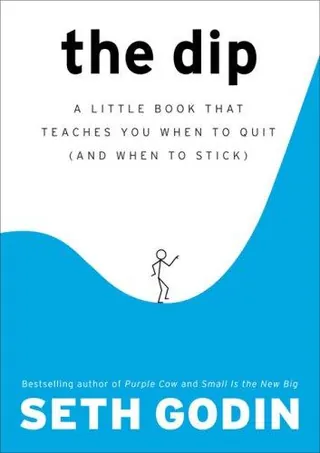
If the answer is no, then this is a strong sign that you might not have the grit to stick through it. Unverified: As Seth Godin calls it, there is The Dip, a moment where most people are likely to quit. It’s the moment where you realise the time it takes to achieve what you want is going to be longer, is less glamorous and requires hard work.Gap · needs evidence: This is my own summary of Seth Godin's book The Dip. I haven't checked it against his wording. Claim, confidence:a personal view; the research on grit is more mixed: Those with grit get through the dip.
Why we quit
Reasons for why you may quit could be many. Shiny Object Syndrome (where you find something more interesting to start) and Fear of Missing Out (FOMO), so you start something new. Or maybe imposter syndrome, where you find that the challenge sets off that feeling of being a failure and not capable. Or maybe it’s simply priorities. Paid client work is more valuable in the short term than going all in on your big idea that takes years to see any rewards.
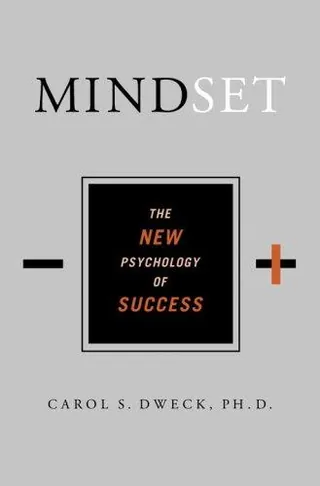
There will be many other reasons why you might quit. The question is, can you develop a growth mindset and resilience to overcome these reasons when they rear their head in the dip?
A competing explanation: A meta-analysis of 88 samples found grit only moderately related to performance and retention, and very strongly related to conscientiousness, with perseverance doing more of the work than consistency of interest.Source: 584 effect sizes from 88 samples (66,807 people). Concludes that interventions to raise grit may have only weak effects on success.Much ado about grit: A meta-analytic synthesis of the grit literature, Marcus Credé, Michael C. Tynan and Peter D. Harms, 2017 Quitting can also be the right call when the stretch ahead leads nowhere.Do you need passion?
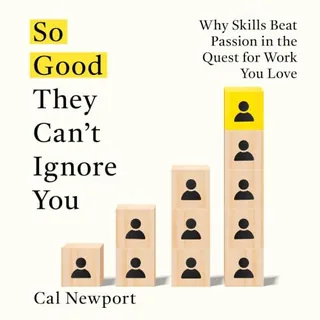
We often think that we need to love what we’re working towards to achieve it. In reality this isn’t always the case. Sometimes we gain passion as we start to master the skills in a certain field.
What would change my mind?: Evidence that people who persist through a long, unrewarding stretch do no better than people who switch to something new, or that passion for a field rarely grows as skill grows.Passion should not be confused with enthusiasm. Enthusiasm comes and goes, but passion is about endurance over the long term. So be careful when you get all energetic with an idea. Unless you can sustain a consistent level of emotion month in and month out, you run a high risk of quitting when you hit the dip.
The question is: what can we do to avoid quitting when it gets hard?
Sources
- Grit: Perseverance and passion for long-term goals, Angela L. Duckworth, Christopher Peterson, Michael D. Matthews and Dennis R. Kelly, 2007
- Much ado about grit: A meta-analytic synthesis of the grit literature, Marcus Credé, Michael C. Tynan and Peter D. Harms, 2017
Books behind this essay
Not sources for any claim here. These are books I have finished that shaped how I think about this question. Where I rely on evidence, it is cited in the text.
Grit (opens audible.co.uk, external site)
Shaped how I think about perseverance and passion as the trait behind sticking with something for years.
The Dip (opens audible.co.uk, external site)
Shaped how I think about the hard middle stretch where most people quit, and whether it is worth getting through.
Mindset (opens audible.co.uk, external site)
Shaped how I think about meeting setbacks with a growth mindset rather than as proof I'm not capable.
So Good They Can't Ignore You (opens audible.co.uk, external site)
Shaped how I think about passion growing out of skill rather than being needed at the start.