The argument in brief
- The question
- When others keep rejecting my ideas, is there a better way to reach a decision than arguing harder?
- The claim
- Asking targeted questions that let others weigh the pros and cons of their own idea (the Socratic Method) tends to lead to better, shared decisions than arguing, and people commit more to solutions they helped reach. Being honest about your motivation makes this easier. Confidence: A practical view from my own experience at Ericsson. No studies are cited.
- The evidence
- My own experience of debates between hardware and user interface teams at Ericsson, where targeted questions shifted the reasoning towards a better solution.
- The Socratic Method, named after Socrates (469 to 399 BCE), whose questioning we know mainly through Plato and other writers.
- No studies on whether questioning beats arguing, or on commitment to self-generated solutions.
- The best counter
- Questions can be used to steer people towards a conclusion you have already chosen while letting them think it was theirs. That is a form of manipulation, and when people notice it they may trust you less.
- What would change my mind
- Evidence that teams who argue positions directly reach better or more lasting decisions than teams guided by questions, or that people feel manipulated by leading questions more often than they feel helped.
- Open gaps
- 1 gap. Statements I haven't verified yet. Each is marked in the text.
The question: When others keep rejecting my ideas, is there a better way to reach a decision than arguing harder?In the book Sell or Be Sold by Grant Cardone, Unverified: he outlines the premise that if you’re not the one doing the selling, you’re being sold to.Gap · needs evidence: I'm summarising the book's premise from memory, not quoting it. While you may think this is mostly a book about sales, it’s more nuanced than that.
We often find ourselves making decisions with others. It could be where to go for lunch, what music to play, or in the workplace, how something should be done. We negotiate through dialogue to try to sell our ideas to others, and they try to sell their ideas back. Sometimes we aren’t clear about why we want our ideas to be heard, so we navigate around it, hoping that they accept what we say and we get what we want.
Winning the debate
In the workplace, our ideas can be wrapped up in who will be left responsible for all the messy detail and hard work. During my employment at Ericsson, I would often be in the middle of highly charged debates about whether some functionality should be done on the hardware by low-level programmers, or by the user interface programmers.
Needless to say, it would often result in a “but you’re wrong” discussion in order to “win” the decision. Secretly, I loved this, as I would pay attention to both teams saying their piece, and I would wait to deploy my secret weapon.
How to stop your ideas being rejected
An assumption: This assumes the other person is willing to think the question through with you. If someone has already decided, or has more power in the room and no reason to engage, questions may simply be ignored.If you’re completely focused on what you want to say and aren’t really listening, then you’re out of luck; this won’t work. However, a lot of people do fall into this trap, and these may be the people you need to help sell your ideas to.
It starts with understanding that everything has pros and cons. To navigate this, you need to start asking questions about other people’s ideas and let them evaluate the pros and cons in real time. Let them discuss what works and what doesn’t. Your role is to prompt the right questions to focus their thinking on the real issues at hand.
This is called the Socratic Method. It’s the technique of focusing the dialogue to break down the underlying assumptions so they can be scrutinised one by one. The technique was derived from the Greek philosopher Socrates in the second half of the 5th century BCE.Source: Gives Socrates’s dates as 469 to 399 BCE and describes his questioning of others in Athens. He wrote nothing himself, so what we know of his method comes second-hand, mostly from Plato, Xenophon and Aristophanes, and much of it is disputed.Socrates, Debra Nails and S. Sara Monoson, Stanford Encyclopedia of Philosophy, 2005, revised 2022
Let others build new understanding
A competing explanation: Questioning can feel like a cross-examination, or like a trap being set, and people may become more defensive rather than less. How the questions are asked, and whether the curiosity is genuine, probably matters as much as the questions themselves.With a careful execution of the Socratic Method, you can prompt others to start entering problem-solving mode. This helps them adopt new thinking that they may not have previously considered.
In my earlier example of working with low-level programmers and UI programmers, I would ask very targeted questions that would present scenarios they hadn’t considered. When they thought about it, their reasoning shifted towards a more desirable solution.
The best part of this method is that Claim, confidence:from my own experience; I cite no studies: they may conclude a whole new solution, a better solution than either yours or theirs. This not only means they have shifted perspective, but also that they accept the new ideas because they came up with them.
Persuasion or manipulation?: There is a line here. If I ask questions because I am open to a better answer, including one that isn’t mine, that is persuasion by reasoning together. If I ask only to lead someone to a conclusion I have already fixed, while letting them believe it was theirs, that is closer to manipulation. My constitution commits me to equipping people to think, not recruiting them to my conclusions (§15). Read in that light, the aim is a better idea, not my idea in disguise.The best way to sell your idea is to make the other person think it was their idea.
Sometimes being honest is easier
The truth be told, you may be trying to sell your ideas because you don’t really want the other person to know why. This is fine, but it does make it a lot harder, and a lot more stressful. But if you do feel confident enough to explain what your motivation is, it can give a lot more context to the reasoning behind your ideas. This will help others accommodate your ideas better.
An assumption: I’m assuming the emotional switch comes from not being heard. Tiredness, status, or what is at stake for someone personally could produce the same reaction.We all get wrapped up in our own thoughts. Time and time again a simple discussion turns into an awkward disagreement. What’s happened here is that the lack of being heard has triggered an emotional response in someone. It can be like the flip of a switch in mood. Claim, confidence:a hunch from experience, stated more strongly than I can show: This is almost always caused because someone has concerns or feelings they are trying to defend, but aren’t being heard.
If you are this person, being honest with yourself about your feelings on the topic can help a lot.
Should you need to tell others what’s really going on? I don’t believe so. But at least be mindful of what’s happening. And if you’re observing that in someone else, just be mindful that they’re feeling overwhelmed and it’s time to step back and collect thoughts.
The ah-ha moment
What would change my mind?: Evidence that teams who argue their positions directly reach better or more lasting decisions than teams guided by questions, or that people more often feel manipulated by leading questions than helped by them.The ah-ha moment is that we’re constantly wanting our ideas to be adopted by others, and others want their ideas adopted by us. The Socratic Method can help break down the assumptions and bring a more unified understanding to the discussion.
When done well, you either learn and accept a new viewpoint or get your ideas accepted. The best part is that others feel like they were part of the solution and are more committed to it.
Sources
- Socrates, Debra Nails and S. Sara Monoson, Stanford Encyclopedia of Philosophy, 2005, revised 2022
Books behind this essay
Not sources for any claim here. These are books I have finished that shaped how I think about this question. Where I rely on evidence, it is cited in the text.
Sell or Be Sold (opens audible.co.uk, external site)
Shaped how I think about everyday decisions with others as a kind of selling, which is where this piece starts.
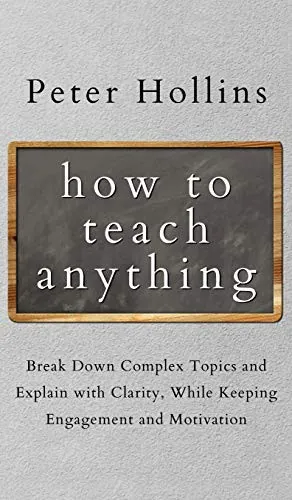
How to Teach Anything (opens audible.co.uk, external site)
Shaped how I think about the Socratic Method as a way to probe understanding rather than to win a point.
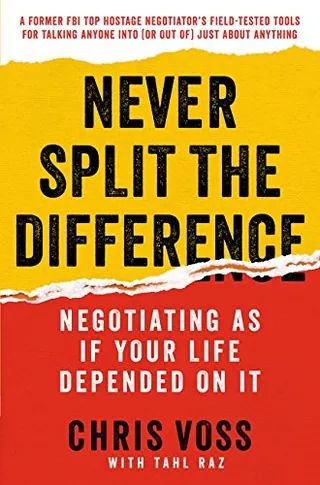
Never Split the Difference (opens audible.co.uk, external site)
Shaped how I think about asking questions in a negotiation instead of pushing my own position.
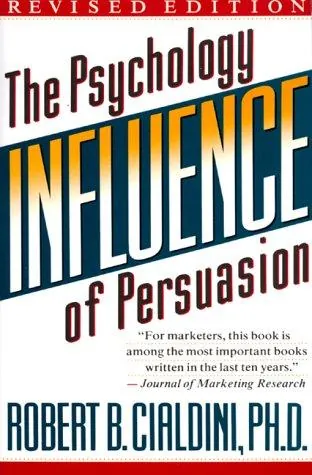
Influence (opens audible.co.uk, external site)
Shaped how I think about the psychology of persuasion, and how easily it can slide into something less honest.