The argument in brief
- The question
- How can I tell, honestly, whether my startup idea is a good one or a bad one?
- The claim
- Most startup ideas fail the test of product market fit because the founder is in love with them. Treat the first idea as a path to the right one, and look honestly for signs that people feel the pain, use the product without thinking, pay for it and tell their friends. Confidence: A practical view from building products, stated firmly. No studies or data are cited, and the startup examples are made up to illustrate the points.
- The evidence
- My own experience of building products and of how founders, me included, fall for their ideas.
- Illustrative, invented startup ideas (a tweet-removal service, ExpertShopper, a meme generator, a calendar booking app) used to show each warning sign.
- Real-world illustrations (Cloudflare, 3D televisions, Facebook, Uber) that I did not check or source at the time.
- The best counter
- Some products that looked like vitamins, confusing ideas or unpaid markets went on to succeed, so these warning signs may reject ideas that only needed more time, a different audience or a different business model.
- What would change my mind
- Evidence that startups which fail these tests early succeed about as often as those that pass them, or that early usage and willingness to pay don't predict which products last.
- Open gaps
- 2 gaps. Statements I haven't verified yet. Each is marked in the text.
The question: How can I tell, honestly, whether my startup idea is a good one or a bad one?Launching any new business or startup is a challenging endeavour. It’s a race to build something people want, and get the people who want it to use it and pay for it. Any business needs to find a product market fit to get off the ground. This essentially means you build something and there is a market to sell that thing to.
The problem, however, is that product market fit is hard. Like, really hard. They say that ideas are easy, it’s all about execution. What that really means is to take an idea and build a market around it, while building a company that can scale and be profitable.
As entrepreneurs, we can fall in love with our ideas. We can see the utopia where everyone raves about using it; it “just works” and you have no competition because you’re “that good”. I, like many others, enjoy this fantasy. It’s what drives me, it’s what motivates me, it’s what makes me happy: to see a future I can help create.
Claim, confidence:a view from experience, not tested: But love can indeed blind us. And startups are no exception. We can be blinded to the harsh realities of what it really means to create a product that people love.
Bad startup ideas
It’s easy to see what other startup ideas founders are in love with. It’s easy to look on them and think, “oh my, that’s a terrible idea”. Guess what, people think the same about your startup too. But the harsh reality is, some really are bad startup ideas and some might just hit the next best thing.
There is another variable: some ideas are good, but the founders are just not good at doing it.
Limits: The startup ideas in what follows (the tweet-removal service, ExpertShopper, the meme generator and the calendar booking app) are made up to illustrate each point. They are not real companies, and how they would fare is my guess.What makes a startup idea bad?
You need to recognise whether you have the following challenges, which could suggest your startup idea is a bad one.
Do customers recognise the problem?
This one is probably most common. We call it the painkiller vs vitamin. Great ideas are painkillers. Your customer has a pain, they go hunting for a solution (a painkiller), discover (via marketing, SEO and so on) that you indeed solve that problem, and boom! They give you money for that solution.
A competing explanation: Plenty of successful products began as vitamins that nobody knew they needed, and became habits later. Calling an idea a vitamin early on may say more about how it’s being sold than about its future.If, however, your solution is a vitamin, as in, “if you buy my product then you won’t experience a pain you don’t yet know you might experience”, then things get a little murkier. You have to sell the fear of not having your product. The problem here is that your biggest competitor is a customer choosing to do nothing. So you need to rely on more wishy-washy marketing and sales tactics to convince someone they need your product and it’ll be a delight.
You could argue that selling insurance is a vitamin: we buy it in the hope that we never use it. But this is unique, as it taps into a primal fear that people have, loss. It’s easy to sell.
Let’s say your startup idea was to allow celebrities to find and remove controversial tweets from their past. This is indeed a vitamin. Why? Because doing nothing might mean that nothing bad happens. You could probably sell this to a celebrity who has had negative publicity for a tweet sent five years ago, but for any celebrities who feel they don’t have that problem, you may struggle to find a product market fit.
People just don’t get what it does
I’d say this is quite common for startups which are deemed visionary. It’s trying to sell the utopia but may rely on some mass adoption for it to become useful. For example, your startup could be a social network for product owners who can get instant support about how to use their product.
So you go on to explain it with examples like: “you’ve just bought a new washing machine but you don’t know what some of the buttons do. You post on ExpertShopper (the name of the startup) and another person can let you know the answer.”
You get blank stares. You get questions back, such as “who lets you know the answer?” or “how does it find another owner?” or, most importantly, “why would someone else waste their time answering questions?”. Needless to say, they just don’t get it. It’s worse, as you not only have to sell this solution to the owners of products to ask questions, you need to incentivise others to answer them.
And the bombshell: someone asks “how do you make money?”. Suddenly you realise that you either have to add in-app adverts, charge a fee to ask questions, or work with brands to pay to be on the platform. The latter one is most difficult, as now you have a new customer to sell to: brands.
Early adopters aren’t using it
All startups need to find their early adopters, who will be the catalyst to traction. So you need to find your early adopters and you need to make sure they love your product. You can do this by watching how they use it and how they talk about it. If you find that they say good things, but just don’t use it, then this is an early warning sign that something is not right!
Your early adopters need to be obsessed. Let’s look at an example: 3D televisions. On paper this sounds like a great technical bet. We’ve been stuck with 2D for a very long time, so this is the next best thing. When manufacturers race to release 3D televisions there are people who buy them, the early adopters. But the real measure is how many hours of 3D television they watch compared with their normal 2D watching habits. Unverified: It’s low. Very low.Gap · needs evidence: I didn't cite any figures for how much 3D owners actually watched in 3D. This is my impression from the time. It has the wow factor, but it’s a gimmick. VR, as I wrote this in 2019, was considered the same.
An assumption: I’m assuming that what early adopters do is a better guide than what they say, and that early usage predicts lasting use.You need to make sure your early adopters are building the habit to use your product and keep using it. Most startups who try to replace email come up with some clever new evolution of it, but so far have failed to change people’s habit and get them to use it without thinking.
I can’t stress this enough. Claim, confidence:stated firmly from experience; no data cited: If your early adopters aren’t in love with the product, it doesn’t matter how much you spend on marketing. It simply won’t fix it. Your startup will eventually die. Make people love your product, and you may need to pivot to achieve that.
There’s no money in your market
This one can be challenging, and startups are always coming up with creative ways to make money: advertising, affiliate links, brand sponsors and so on. Do you know what the simplest startup ideas have? They have a product that the users pay to use. It’s an exchange of value with just two parties involved, you the startup and your customer. This is an excellent model for business to business (B2B) startups, but may be harder for business to consumer (B2C) startups if you’re not selling a physical product.
But sometimes, there just isn’t money in your market. Either there are not enough people in the market, or the very nature of that market resists spending money. One example may be “we create custom memes based on what a user searches for”. So people may search for “I now see how clever you are [sarcastic]” and the system automatically generates a meme for putting in a tweet response. You may find that this is extremely popular, but you need to make money. So you decide that you will charge $0.10 for every meme generated. It would probably turn out that people love the joke, but the thought of paying for it is stupid. People want it free, and don’t want to pay for it.
Make sure you’re not selling to a market where people are averse to paying.
What makes a great startup idea?
There are two ways to answer this: first, to explain what ideas have a greater chance of succeeding, and second, how to find those ideas if you don’t have one yet.
It must solve a real problem
If you can find an idea that solves a problem people actively look to solve, and would be prepared to spend money to solve, then this is a great idea. Cloudflare do this fantastically. If your website gets hit by a Denial of Service attack (DDoS) you need to find a solution, and fast, literally with a credit card in hand. Unverified: They come up in Google when you search, and their homepage has a call to action with the label “Under Attack?”.Gap · no source yet: I haven't been able to check an archived copy of Cloudflare's 2019 homepage or search results to confirm this. This is a painkiller. It solves a real-world problem.
A gateway to new problems to solve
You may start with an idea, such as a calendar booking app that allows companies to send invite links for users to arrange a common time to have a call. When you start talking to companies, pitching and selling your solution, you may find very quickly that this is not a real pain point, as they have a habit of sharing calendars with the team and just look for when there’s a free slot. This means it’ll be hard to sell something when people are used to working around it.
But through those discussions you discover that they do have a pain point, one that they don’t know how to solve, and that is screen sharing with clients with minimal fuss. They find that they keep spending 20 minutes at the start of a call with new clients while the client installs software, can’t get a microphone to work, their browser is glitchy, and so on. They want a simple, one-click solution that clients can use. And they would pay money for that!
People love your product
For your startup to be successful, it needs to either be a rock solid utility, such as filing tax returns once a year, or it must become habitual, where people use it without thinking. The latter is where people love your product: they are invested, they tell their friends, and most importantly, they would experience pain if your product went away.
I feel that any startup should nail this as early as possible, before any thinking of how to grow and scale. It’s what orients your startup in the right direction before strapping on the rocket boosters.
What would change my mind?: Evidence that startups which fail these tests early succeed about as often as those that pass them, or that early usage and willingness to pay don’t predict which products last.Work with your early adopters and pay attention to what they are saying. Don’t convince yourself that they will love it in time, or that they aren’t the right type of user. Most importantly, be honest with yourself when you see that people just don’t love it. Iterate fast, fail fast and pivot if that’s what it takes.
People tell others
Find how you can maximise the network effect for your startup. You want your early users to be advocates for finding new users. This is how Facebook dominated. Look at what you can do to empower your users to communicate their love for your product.
Great ideas are simple to explain and anyone can do it, where the benefit is obvious. “Uber: I just press a button and a taxi arrives in 2 minutes.” It’s simple to explain and the benefit is convenience.
Maximise your runway
Let’s mention runway: the time you have to find your product market fit before you run out of cash, or quit.
You must maximise your runway so that you can iterate on your current idea or pivot to a better idea. You need to give yourself the greatest number of chances to do this.
Imagine playing roulette at a casino and someone says, “you can play as many times as you want, but you’ve only got 5 minutes”. Do you spend all that time calculating what chips to place down for one spin of the wheel? Nope! You go as quickly as possible to keep that wheel spinning. Your startup is the same. Iterate quickly within your fixed runway.
In conclusion
Go in assuming that your initial startup idea isn’t the right one, but is a path to finding the right one. That means you need to find out as quickly as possible why it’s a bad idea, and what would be a good move to test next.
When you find that people are loving your product, willing to pay for it and are telling their friends, you have found your product market fit.
Books behind this essay
Not sources for any claim here. These are books I have finished that shaped how I think about this question. Where I rely on evidence, it is cited in the text.
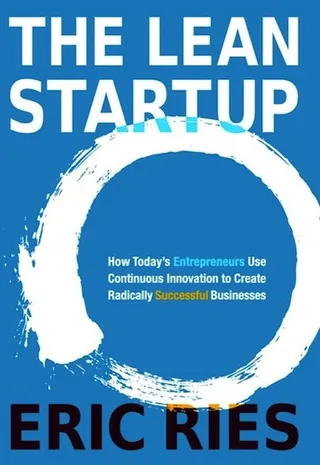
The Lean Startup (opens audible.co.uk, external site)
Shaped how I think about treating a startup idea as a set of assumptions to test quickly, and pivoting when they fail.
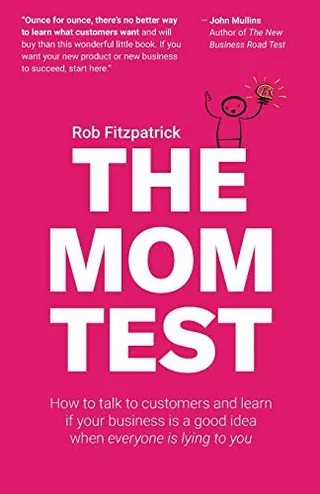
The Mom Test (opens audible.co.uk, external site)
Shaped how I think about talking to customers in a way that tells you the truth about your idea rather than what you hope to hear.
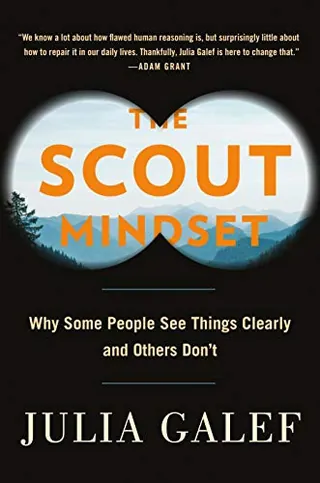
The Scout Mindset (opens audible.co.uk, external site)
Shaped how I think about wanting to see an idea as it really is more than wanting it to be good.
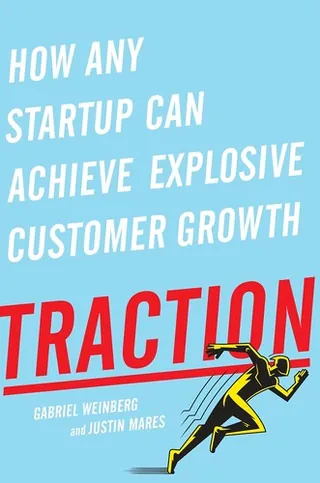
Traction (opens audible.co.uk, external site)
Shaped how I think about the difference between getting early users and getting a product they keep using.