The argument in brief
- The question
- Does believing that intelligence is fixed change how we learn from our mistakes?
- The claim
- A fixed mindset is associated with a weaker brain response to our own mistakes, which may make us less likely to notice and correct them, and so less likely to learn. Confidence: Supported by one small, correlational lab study. Whether changing your mindset changes the signal is unknown.
- The evidence
- Moser and colleagues (Psychological Science, 2011) recorded brain activity while students did a simple letter task. Those with more of a growth mindset showed a larger second error signal (the error positivity) and were more accurate after a mistake. A conference abstract of the work describes 25 undergraduates.
- The ScienceDaily report of the study, which describes both signals as occurring within a quarter of a second of the mistake.
- No studies that changed people's mindset and then measured the signal.
- The best counter
- Mindset may be a marker of something else, such as prior ability, motivation or anxiety, and large meta-analyses (Sisk and colleagues, 2018) found only weak links between mindset and academic achievement, and weak effects of mindset interventions overall.
- What would change my mind
- Larger replications that find no link between mindset and the error signal, or experiments showing that shifting someone's mindset leaves their response to mistakes unchanged.
The question: Does believing that intelligence is fixed change how we learn from our mistakes?Chances are that you are more of a growth mindset type of person. I doubt you’d be reading these articles about mindset and mastery if you weren’t. But whether we like it or not, having a fixed or growth mindset isn’t an absolute. We will exhibit traits of each given different situations.
Today we’re going to look at what having a fixed mindset does to our ability to learn. Generally speaking, if you look at one of the fixed mindset traits, it will be the belief that intelligence and talent are fixed. This means you’re born with a certain level of capability and that’s it. Some people will just be better, and some people will never get there.
An assumption: This rests on a single study. It measured an association between people’s beliefs and their brain response; it did not change anyone’s beliefs to see what followed.There’s something fascinating about this belief. Claim, confidence:stronger than the study supports; it found an association, not a cause: It actually changes the way our brain learns.
One of my favourite quotes is:
“Whether you think you can, or think you can’t … you’re right.” Often attributed to Henry Ford.Source: The earliest ascription to Ford that Quote Investigator found is a 1947 Reader’s Digest filler, printed months after his death, with different wording and no source given. No competing ascription was found, so the link to Ford is likely but not certain.Whether You Believe You Can Do a Thing or Not, You Are Right, Quote Investigator, 2015-02-03
How a fixed mindset affects the brain
Interesting research has shown that those who associate themselves with a fixed mindset trait have a different response in their brain when they make errors on a task.Source: A student award presentation of the same work. It describes brain activity and post-error behaviour measured in 25 undergraduates doing a flanker task, a small sample from one university.Mind Your Errors: Neural Evidence Linking Growth Mindset to Remedial Action (conference abstract), Hans S. Schroder, Jason S. Moser, Carrie Heeter and Yu-Hao Lee, Association for Psychological Science
When someone makes a mistake, the brain has two processing signals as a result. The first is recognition of the error and the second seems to indicate that the person is consciously aware of the mistake with a goal of trying to make it right. Both these signals happen within about 250ms of the mistake happening.Source: The press report of the study. Participants named the middle letter of strings such as NNMNN while wearing an EEG cap. It says both signals occur within a quarter of a second of the mistake, which matches the 250ms here.How your brain reacts to mistakes depends on your mindset, Association for Psychological Science, via ScienceDaily, 2011-10-01
Limits: One lab, a small group of students, a simple letter task and EEG recordings. The study shows that mindset and the size of the second signal go together; it can’t show which causes which, or that the pattern holds outside the lab.What’s interesting here is that Claim, confidence:what the study found, in one small sample: those who believe that they can learn from mistakes, a growth mindset trait, had a stronger secondary signal. This allowed them to be consciously aware of the mistake and to figure out how to correct it by paying more attention.Source: Psychological Science 22(12), 1484–1489. A growth mindset went with a larger error positivity (Pe), a signal linked to awareness of and attention to errors, and with better accuracy after mistakes; the Pe statistically mediated that link. I read the published abstract, not the full paper.Mind Your Errors: Evidence for a Neural Mechanism Linking Growth Mind-Set to Adaptive Posterror Adjustments, Jason S. Moser, Hans S. Schroder, Carrie Heeter, Tim P. Moran and Yu-Hao Lee, 2011
A competing explanation: Mindset might be a marker of something else, such as prior skill, motivation or anxiety about failing. And across many studies, Sisk and colleagues (2018) found only weak links between mindset and academic achievement, and weak effects overall from interventions meant to change it, with some benefit for students at risk or from poorer backgrounds.What is unclear is whether reframing your understanding of mindset from a fixed to a growth will inherently boost the secondary signal.Source: Psychological Science 29(4), 549–571. Two meta-analyses (273 effect sizes from about 366,000 students; 43 intervention studies with about 57,000 students). Overall effects were weak in both. It measures school achievement, not brain signals, but bears on whether changing mindset changes much.To What Extent and Under Which Circumstances Are Growth Mind-Sets Important to Academic Achievement? Two Meta-Analyses, Victoria F. Sisk, Alexander P. Burgoyne, Jingze Sun, Jennifer L. Butler and Brooke N. Macnamara, 2018 Claim, confidence:a correlation in one small study; “clearly” overstates it: But it does clearly show that your mindset has a direct correlation to your ability to pay attention and improve your learning.
Without this signal, the mistakes are more likely to go unnoticed, or no corrective action is learned. Thus preventing you from improving.
The ah-ha moment
What would change my mind?: Larger replications that find no link between mindset and the error signal, or experiments showing that shifting someone’s mindset leaves their response to mistakes unchanged.A fixed mindset isn’t just a fancy term used to describe traits, but has a direct correlation to our brain’s ability to pay attention and learn from mistakes. The question is whether you can train your brain to pay more attention when making mistakes, helping your learning. And of course, the growth mindset readers will naturally think this is possible.
Sources
- Whether You Believe You Can Do a Thing or Not, You Are Right, Quote Investigator, 2015-02-03
- Mind Your Errors: Neural Evidence Linking Growth Mindset to Remedial Action (conference abstract), Hans S. Schroder, Jason S. Moser, Carrie Heeter and Yu-Hao Lee, Association for Psychological Science
- How your brain reacts to mistakes depends on your mindset, Association for Psychological Science, via ScienceDaily, 2011-10-01
- Mind Your Errors: Evidence for a Neural Mechanism Linking Growth Mind-Set to Adaptive Posterror Adjustments, Jason S. Moser, Hans S. Schroder, Carrie Heeter, Tim P. Moran and Yu-Hao Lee, 2011
- To What Extent and Under Which Circumstances Are Growth Mind-Sets Important to Academic Achievement? Two Meta-Analyses, Victoria F. Sisk, Alexander P. Burgoyne, Jingze Sun, Jennifer L. Butler and Brooke N. Macnamara, 2018
Books behind this essay
Not sources for any claim here. These are books I have finished that shaped how I think about this question. Where I rely on evidence, it is cited in the text.
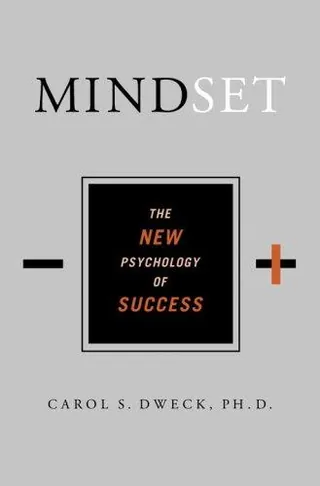
Mindset (opens audible.co.uk, external site)
Shaped how I think about the difference between believing ability is fixed and believing it can grow.
Black Box Thinking (opens audible.co.uk, external site)
Shaped how I think about mistakes as information to learn from rather than something to hide.
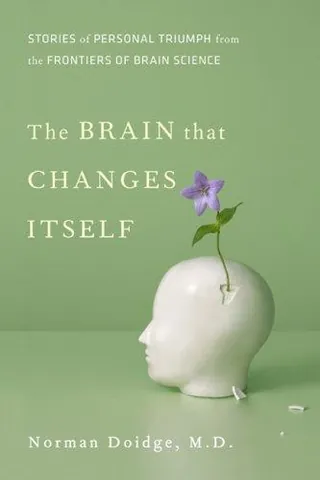
The Brain that Changes Itself (opens audible.co.uk, external site)
Shaped how I think about the brain as something that changes with how we use it.
How We Learn (opens audible.co.uk, external site)
Shaped how I think about what actually happens when we learn, and where intuition about it goes wrong.