The argument in brief
- The question
- Why is learning so hard when we have no personal reason to know the subject?
- The claim
- Learning without a personal why is dull and much harder to succeed with; when learning has a purpose, it is easier to invest time and energy in it. Confidence: A personal reflection from my own experience. No studies cited.
- The evidence
- My own experience of A-level pure mathematics, which I found abstract and hard, alongside computing, which I loved.
- My later learning, such as behavioural science, which I approach with a clear purpose.
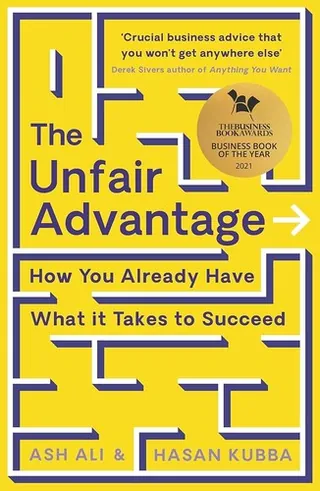
- The idea of being a Why learner, which I took from The Unfair Advantage by Ash Ali and Hasan Kubba. I haven't checked the wording against the book.
- The best counter
- Sometimes the why comes after the learning. Interest can grow out of competence, and some foundations, like abstract maths, only show their purpose once you have them.
- What would change my mind
- Evidence that people who learn with a clear personal purpose don't learn more, or don't stick with it longer, than people who learn without one.
- Open gaps
- 2 gaps. Statements I haven't verified yet. Each is marked in the text.
Learning without a why
The question: Why is learning so hard when we have no personal reason to know the subject?While listening to the book The Unfair Advantage by Ash Ali and Hasan Kubba, Unverified: they talk about why learning can be extremely difficult at a young age. They refer to it as you needing to be a Why learner.Gap · unchecked quote: I took this from listening to the audiobook and haven't checked the wording or the “Why learner” term against the text.
Unverified: Most school kids experience this.Gap · needs evidence: This is my impression from my own schooling; I have no figures on how widely students feel this way. The need to learn a lot of meaningless information to pass your exams. It’s hard work when your heart isn’t in it. The reason it’s hard is because they lack a personal reason to why they want to know the subject.
Learning should be a gateway, not a goal.
No wonder so many people are averse to continuing their education when they enter adulthood. It brings back memories of the frustration and boredom of learning material just to pass an exam.
My A-level maths
I reflect on my A-level mathematics (what I studied in the UK at age 16 to 18). We would be covering pure mathematics, which was abstract and confusing. I loved maths, but this was hard. I was also studying computing, where I was spending countless hours learning the ins and outs of programming. I loved every minute of it.
An assumption: I am assuming the missing why explains why pure maths was hard for me. It may also simply have been harder material, taught in a way that didn’t suit me; I can’t separate the two from memory.What I didn’t grasp at the time was the ability to combine both fields. To use my programming to build statistics calculations or computer graphics. What I lacked was a why for my mathematics that would have been perfect for my programming.
Fast forward and there have been many times where this skillset would have been valuable. But I lacked the insight to view my learning from a different perspective.
Learning with a purpose
When I approach my learning now, it always has a purpose. I know why it’s something I’m interested in. This makes it easier to invest my time and energy into learning, as I have a measure of progress when I can utilise it in serving my greater purpose.
One such example is my recent curiosity for behavioural science. While I’m at the start of my exploration of this subject, my why is clear. I want to understand what makes people do what they do at the group level. This will help me become a better marketer, a better advertiser and a better communicator in helping people on my mission: to inspire a generation of thinkers and doers.
Deep down, my why is to help understand the fabric of behaviour so I can contribute to a brighter and more actionable future. With this, as I explore the subject of behavioural science, I will do so with focus on my why and a passion to succeed. It makes learning a lot more enjoyable.
The ah-ha moment
A competing explanation: Sometimes the why only arrives after the learning. Interest can grow out of getting good at something, and some foundations, like abstract maths, only show their use once you have them. Waiting for a why first could mean never starting.Today’s ah-ha moment is that Claim, confidence:a personal reflection from my own experience, not tested: if you don’t have a why, your learning will be dull and in turn a lot harder to succeed with.
What are you learning right now, and does that align with your why?
Books behind this essay
Not sources for any claim here. These are books I have finished that shaped how I think about this question. Where I rely on evidence, it is cited in the text.
The Unfair Advantage (opens audible.co.uk, external site)
Shaped how I think about learning with a personal reason behind it, which is where this piece started.
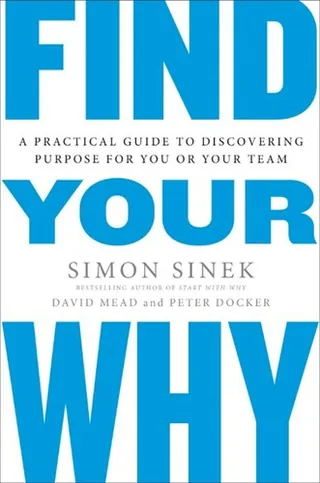
Find Your Why (opens audible.co.uk, external site)
Shaped how I think about finding the purpose that gives my learning a direction.
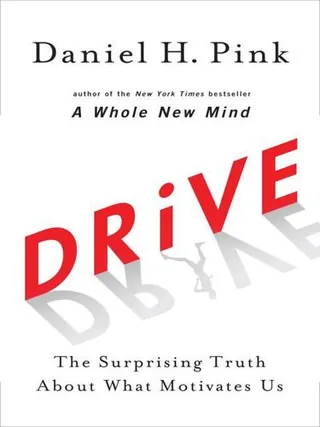
Drive (opens audible.co.uk, external site)
Shaped how I think about motivation that comes from inside rather than from exams and rewards.
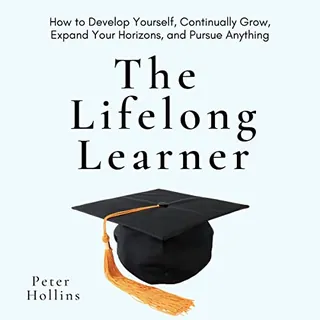
The Lifelong Learner (opens audible.co.uk, external site)
Shaped how I think about carrying on learning as an adult, long after school is over.