The argument in brief
- The question
- What does having a why actually do for you when you don't yet know how to get there?
- The claim
- Having a why makes you scan for ideas that fit your direction, so you recognise missing pieces of the puzzle that would otherwise pass you by. Confidence: A personal reflection from one experience of my own. No studies are cited.
- The evidence
- My own experience of reading Hacking the Unconscious by Rory Sutherland and recognising behavioural science as a missing piece of my why.
- Sutherland founded a behavioural science practice within Ogilvy in 2012, which fits his account of working with behavioural scientists.
- No studies of attention, goals or noticing.
- The best counter
- A strong why can also make you see fit everywhere: you may notice what confirms your direction and miss what challenges it, or mistake a passing interest for a missing piece.
- What would change my mind
- Evidence that people with a clear purpose are no better at spotting useful opportunities than people without one, or that the pieces they find fit less often than they feel they do.
The question: What does a why do for you when you don’t know how you’ll get there?Having a “why” is an extremely valuable thing. It’s the North Star on which you can focus your ideas and energies. It aligns with your “just cause”: the mission that you’re trying to fulfil.
An assumption: I’m assuming the noticing comes from the why itself, and not from simply reading widely and being curious.By having a why, you will often find that you start to scan for new ideas and directions that can be a missing piece to the puzzle. This has happened to me recently.
A book about behaviour
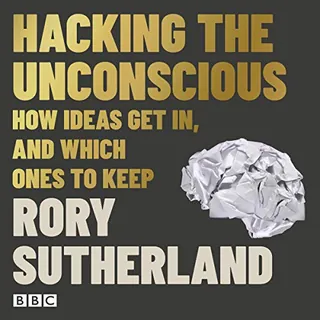
I was reading the book Hacking the Unconscious by Rory Sutherland. He is an ad man, and if you’ve ever seen the hit TV series Mad Men, you would think of him as the Don Draper. He knows the behaviour people will take when they see an ad.
In the book, he mentions that a lot of his work involves collaborating with behavioural scientists.Source: States that in 2012 Sutherland founded the behavioural science practice within the Ogilvy Group, aimed at marketing methods drawn from psychology and economics. It confirms his link to behavioural science, not what he says in the book.Rory Sutherland (advertising executive), Wikipedia These are the people who draw on psychology and economics to understand why people behave as they do under certain circumstances. They aren’t as interested in what an individual would do, but more in what large groups of people will do on average, and what can nudge them to take a specific action. That could be to buy a product, or to donate to a charity. There are many uses for this at the society level.
The missing piece
It was at this moment I realised this was one of the missing pieces to a puzzle I had been pondering for a while. How do I “nudge” people to take action and use my products? How do I teach this nudge theory to my audience so they can succeed at their own just causes?
Limits: Nudging people towards my own products is a commercial interest as well as a mission, which is why it’s disclosed below. Knowing how to nudge is not the same as knowing which nudges are fair.My long-term why is to inspire a generation of Thinkers and Doers. I do this by teaching knowledge management and building my own note-taking app. That’s the “thinker” part. But how do I help people become “doers”? How do I help them take action, inspire other people and make the world a better place? That’s where behavioural science could come in. It could help me understand how to help the next generation to create positive change.
What I have done is find a piece of my long-term puzzle. It’s now an area that I can explore in more detail and see how it can be used.
Let the path reveal itself
A competing explanation: A strong why can make you see fit everywhere. You may notice what confirms your direction and overlook what challenges it, or mistake a passing interest for a missing piece.That’s the value of having a why. Claim, confidence:a personal reflection from one experience: You don’t know how to get where you want to go, but by having a why, you get to scan for pieces of the puzzle that just feel like they fit.
I like to think of this as leaning into the direction you want to go, and letting the path reveal itself. Today, the path has opened up, and that is the field of behavioural science.
The ah-ha moment
What would change my mind?: Evidence that people with a clear purpose are no better at spotting useful opportunities than people without one, or that the pieces they find fit less often than it feels.Don’t worry about how you’re going to get where you want to go. Just know the direction and scan for things that might reveal themselves as a missing piece to the puzzle. Without a why, it would pass you by and you would be none the wiser.
Sources
- Rory Sutherland (advertising executive), Wikipedia
Books behind this essay
Not sources for any claim here. These are books I have finished that shaped how I think about this question. Where I rely on evidence, it is cited in the text.
Hacking The Unconscious (opens audible.co.uk, external site)
Shaped how I think about behavioural science as a way to understand why people act, and the book that prompted this piece.
Find Your Why (opens audible.co.uk, external site)
Shaped how I think about having a why as a North Star for focusing ideas and energy.
The Infinite Game (opens audible.co.uk, external site)
Shaped how I think about a just cause as the mission that a why serves.
Start with Why (opens audible.co.uk, external site)
Shaped how I think about starting from purpose before working out the how.