The argument in brief
- The question
- What is the why behind an idea, and where do you find it if you don't have one yet?
- The claim
- A strong why has deep personal meaning to you and is of service to others, so it isn't about you. It is revealed by paying attention to what you care about over time, not created on the spot. Confidence: A personal view from my own experience and conversations with entrepreneurs. No studies cited.
- The evidence
- Conversations with entrepreneurs who came to me to sound out their ideas, and the self-focused answers many gave.
- My own experience of noticing education as a recurring theme, and of feeling happier and more fulfilled for learning about mindset and psychology.
- The lens comes from Simon Sinek's Start With Why; the point about competence coming before enjoyment comes from Angela Duckworth's Grit, which I haven't checked against the text.
- The best counter
- Many successful projects start from money, status or curiosity, and the why may be a story told afterwards. Purpose may follow from getting good at something rather than lead to it.
- What would change my mind
- Evidence that founders or creators with an other-focused purpose do no better, or stick at it no longer, than those working for money, status or their own creativity.
- Open gaps
- 2 gaps. Statements I haven't verified yet. Each is marked in the text.
The question: Is there a bigger driving force behind your idea, or are you in it for the status and money?I’ve met many entrepreneurs in my time. Talented and passionate people. They often come to me to sound out their idea for a project or business they want to build. I ask a simple question. What’s your why?
Limits: This rests on my own conversations and experience. I haven’t measured whether a why changes anyone’s odds, and the people I remember may not be typical.Taken from the Simon Sinek book Start With Why, I find this is a fantastic lens that helps you reveal whether there’s a bigger driving force at play or whether you’re in it for the status and money. Claim, confidence:a personal belief; I offer no evidence for it: I believe the answer can change the odds of your success, drastically.
A YouTube example
Let’s take YouTube as an example. To some it has an appeal. One where you’re creative, have a growing channel and seem confident and charismatic on camera. It’s desirable to create a channel about things that interest us, such as programming if you’re a developer, or design if you’re a designer.
So the question still stands. Why?
Some entrepreneurs tend to focus on themselves when they try to answer this question. Usually it’s in the form of:
- So I can make enough money to quit my job
- So I can build an audience
- So I can be creative
The thing about a why though, is that it’s not about you.
Your why is not about you
An assumption: I am assuming a why that serves others will hold up better than one that serves only you. That is a value as much as a finding.Put simply, Claim, confidence:a working view from my own experience: your why is a slightly unobtainable thing that you focus on, has deep and personal meaning to you and is of service to others.
If you’re a designer and want to create a YouTube channel, then your why should be in helping designers do something, and that something must be something you really care about. Maybe it’s helping new designers get their career off the ground because you know how painful that experience can be.
A competing explanation: Plenty of good businesses begin with money, status or plain curiosity, and the why can be a story told afterwards. Being faster or cheaper is also a real service to the people who use a product.Maybe you’re building a SaaS business, then your why needs to transform your end user. I’ll dig into this one another time, but if you focus too much on being faster, cheaper or having a better UX than the competition, you’re missing the point. Sure you might make a successful business, but without that why it’s missing the opportunity to have impact.
What’s my why?
When I first wrote this in 2022, I was building a note-taking app called Flowtelic. I aimed for it to be the best note-taking app out there. But my why has nothing to do with note-taking. Note-taking is just a tool to achieve the goal.
My goal is to inspire a generation of thinkers and doers. I want to arm the next generation with the skill of understanding and the mindset of positivity. I want these to be deployed back into society for a positive good. Why do I want this? I want to create a better future for those to come as a form of gratitude for the life and opportunity I have. I believe I have the skills to help, and at some point, it just feels right in my core.
My why is bigger than me. It is to serve people who I will never speak to. I do not need my name in the legacy I leave. It’s not about me.
It just so happens that I love building a note-taking app that helps pave the way to make this happen.
What’s your idea, and why do you want to do it?
Where do you find your why?
The question “Why this idea?” aims to bridge the gap between what you do and why you do it. As an entrepreneur, the what comes down to the product I’m building, the content I create and the community I’m gathering. The why is the thread that stitches it all together and allows me to focus on achieving the goals, even in the absence of motivation.
However, this really only works when you have found your why. But what if you are still searching? Where do you find your why?
We’re all different and no one person can speak on behalf of another. I can’t tell you what your why should be. But I can help you reveal it. Claim, confidence:a working view from my own experience: A why is revealed, not created.
It’s time to get in touch with your intrinsic motivations. Unlike doing things for money and status (extrinsic motivation), intrinsic is where it comes from within.
You need to start paying attention to the things you care about. Start journaling and asking the question. What makes me get passionate? What makes me see a future that could be better? What makes me frustrated that nobody is doing something to fix it? If you do this over time, you’ll start to see patterns emerge.
How it happened for me
For me, education seems to be a recurring theme. I’m frustrated that Unverified: we don’t teach about growth mindset, psychology, depression and anxiety, grit, resilience, emotional intelligence, egoGap · needs evidence: This is my impression of schooling in general. I haven't checked what curricula actually cover on these topics., and how all this plays with our own internal thinking and the relationships of the people around us.
The more I read about these things, the more I see the gaps in how the next generation of people simply don’t have access to this understanding. On a personal level, I’ve been happier and more fulfilled by learning this. I want to pay it forward.
As time went on, I realised this was something my mind kept going back to, kept seeing the problem and kept seeing a very simple question: “How can a future generation benefit by knowing this?”
If you can’t spot your why
Do not worry. It’s a process and can take time. In this case, focus on challenging yourself with skills that interest you. For example, this may be building your own audience teaching someone who represents you but from 12 months ago. Just try a variety of things and get a feel for what gets you excited, and what doesn’t.
However, it must be a challenge that allows you to grow in some way. Unverified: From the book Grit by Angela Duckworth, it can take gaining competence in a field before someone really enjoys what they do.Gap · no source yet: I took this from Angela Duckworth's Grit but haven't checked my summary against the book. If you’re forever starting, you’ll feel lost and unproductive. Give yourself permission to try hard.
Over to you
What would change my mind?: Evidence that founders or creators with an other-focused purpose do no better, or stick at it no longer, than those working for money, status or their own creativity.Open up a notebook, paper or digital, it doesn’t matter. And commit to writing what has interested you once a week for the next 6 weeks. Start to talk to yourself and break down the barrier by being honest with what interests you.
Now imagine going all in on one idea. Does that get you excited, or does it put you off?
Books behind this essay
Not sources for any claim here. These are books I have finished that shaped how I think about this question. Where I rely on evidence, it is cited in the text.
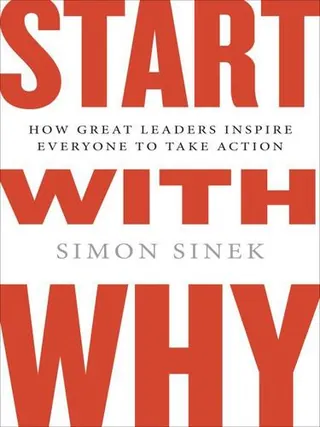
Start with Why (opens audible.co.uk, external site)
Shaped how I think about asking why before what, the lens this whole piece uses.
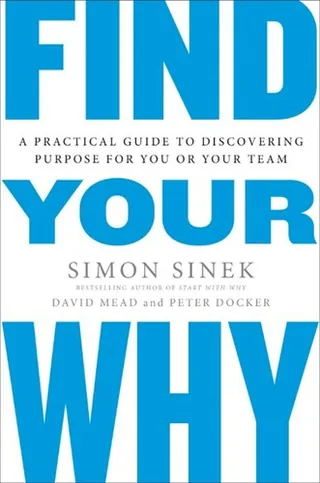
Find Your Why (opens audible.co.uk, external site)
Shaped how I think about a why as something you uncover from your own story rather than invent.
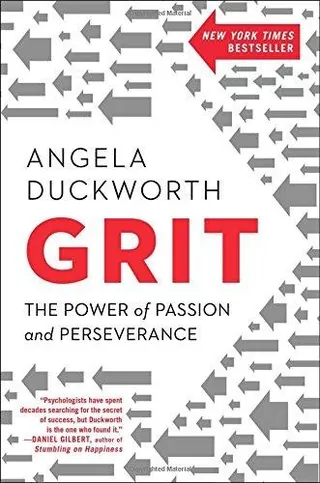
Grit (opens audible.co.uk, external site)
Shaped how I think about sticking with a challenge long enough to find out whether it really interests you.
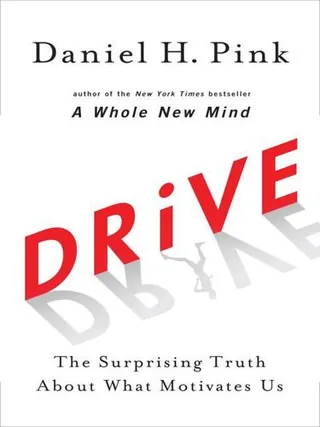
Drive (opens audible.co.uk, external site)
Shaped how I think about the difference between motivation from within and doing things for money and status.
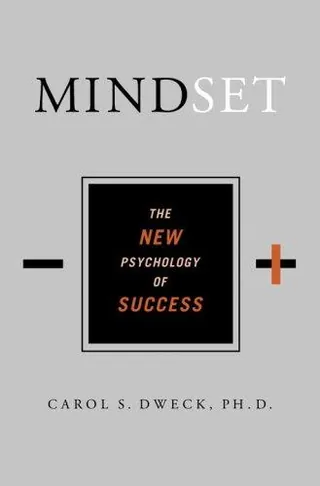
Mindset (opens audible.co.uk, external site)
Shaped how I think about growth mindset, one of the things I wish we were taught.