The argument in brief
- The question
- When people treat us with status, is it us they are appreciating, or the role we play?
- The claim
- The status and attention we receive mostly belong to the roles we play, not to us as people. Designing for a role, and what makes it valuable to others, keeps the ego apart from the status and points us towards doing something rather than being someone. Confidence: A personal reflection, prompted by a story Simon Sinek tells. No studies are cited.
- The evidence
- A story Simon Sinek tells about a former Under Secretary of Defense and a styrofoam cup. I have not checked the exact wording of the quote against the original.
- My own reflection on building a personal brand and on the roles I want to design for in my business.
- No studies of status, identity or motivation.
- The best counter
- Some recognition really is personal: people return to a particular writer, teacher or founder because of who they are, and a role filled by someone else would not attract the same people.
- What would change my mind
- If it turned out that audiences and colleagues mostly stay loyal to the person even after they change roles, the line between person and role would be much weaker than I suggest.
- Open gaps
- 1 gap. Statements I haven't verified yet. Each is marked in the text.
The question: When people treat us with status, is it us they are appreciating, or the role we play?Do you want to be someone, or do you want to do something? This is a great question to ask yourself.
Sometimes you measure your success based on your social standing, the wealth you generate or the influence you have. Other times you measure your success by the work you do, the impact you have and the lives you change. Often though, you pick a lane and build your career around one or the other. You either want to be someone, or you want to do something.
The styrofoam cup
Limits: I am retelling a story Simon Sinek tells about someone else. I can’t check the details of the event, and one anecdote shows how status can work, not how often it works this way.In a wonderful speech by Simon Sinek, he tells a story titled “Remember Who You Are”. It’s about a retired Under Secretary of Defense who gave a talk at an event. He wanted some coffee, and when he asked, he was told he could make it himself and use a cheap styrofoam cup.
The year prior, before he had retired, he had spoken at the same event, but this time he was treated as someone of great importance. When it came to the coffee he was presented with it in a ceramic cup, not a cheap styrofoam cup. He concludes with:
Unverified: “The lesson is the ceramic cup was never meant for me, it was for the position I hold. I deserve a styrofoam cup. We all deserve styrofoam cups.”Gap · unchecked quote: I quoted this from the speech as I remembered it. I haven't checked the wording against the video or against Sinek's book Leaders Eat Last, where the story also appears.
Ever since I watched this speech, I’ve reflected on this time and time again.
As someone who sees the value in building a personal brand, it is important that I recognise I’m not building anything for myself, but rather for the role which I fulfil. Claim, confidence:a personal view; I haven't asked my audience: My audience follows the role I play, not me as a person.
A competing explanation: Some recognition is personal. People follow a particular writer or teacher because of their voice, history and character, and someone else in the same role would not keep them. A personal brand may be exactly where the person and the role are hardest to separate.You play many different roles in your life. You may be the owner of a company, the manager of a team, the winner of an award or the influencer online. These are not you, these are the roles you play.
It means that while it seems like you have earned the ceramic cup when you play these roles, it’s humbling to remember that you deserve the styrofoam cup. If you quit tomorrow, someone else would take your place and fulfil your role.
Design for the role
People who want to be someone are really designing for a role that is about them. They want to deserve the ceramic cup. Success to them is for others to appreciate who they are. They value what they’ve done in the past and expect recognition for it.
An assumption: I am treating “being someone” and “doing something” as two lanes. Most people probably want some of both, and wanting recognition is not always ego; it can be how we learn that our work is valued.However, if you want to do something, you recognise that it’s the role you play that deploys action. You recognise that it’s a role that has impact on the lives of others. Success to you is in your ability to perform the role to the best of your ability, to have utility and skill that is reusable time and time again.
In doing that, you remember that if you are given a ceramic cup, it means people appreciate the work you do, not who you are. And that’s okay.
What roles do you want?
It’s time to reflect inwards. What roles do you want? What is it that you are hoping to achieve in the next three to five years?
- Do you want to be an accomplished writer?
- Do you want to be the best practitioner in your industry?
- Do you want to be a tech entrepreneur?
- Do you want to be a micro-influencer with a personal brand?
Whatever it is, start to think about what makes this role valuable. Is it that you can help others solve a problem they have? Is it that you can entertain them?
Now look at what it would take to do this role to the best of your ability. These are the skills you can learn.
An example
Looking at this for myself, there are a couple of roles I want to design for within my business:
- To be a successful entrepreneur in the note-taking space
- To be a successful educator in the personal knowledge space
For me, these roles fall under my ultimate why: to “help inspire a generation of thinkers and doers”.
To achieve this, I will look to the skills and systems needed to fulfil these. They range from building great software, marketing, educating on camera, researching, writing and more.
Limits: This is my plan as it stood in November 2022, not a result. Whether separating myself from these roles actually kept my ego out of it is something I can’t show here.Here is the key point. In order for me to fulfil my ultimate why, it doesn’t have to be me doing these roles. At some point in the future, I should be free to decide whether I personally fill that role, or let someone else do it. Claim, confidence:a working belief from my own reflection, untested: Doing so helps separate the ego from status. The role has status; my ego shouldn’t be attached to that.
What roles do you play?
What would change my mind?: If people mostly stay loyal to the person after they move on from a role, or if tying my identity to my work made me do it better rather than worse, I would hold this view more loosely.My ah-ha moment is that your measure of success is really a measure of the role you play, not you as an individual. Recognise that status and attention come to the position you hold, and that could be temporary and fleeting.
Be humbled. Be someone who wants to do something great, not just be someone great.
Books behind this essay
Not sources for any claim here. These are books I have finished that shaped how I think about this question. Where I rely on evidence, it is cited in the text.
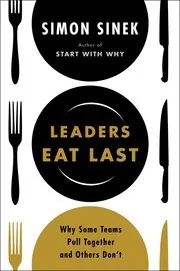
Leaders Eat Last (opens audible.co.uk, external site)
Shaped how I think about the difference between the authority of a position and the person who holds it.
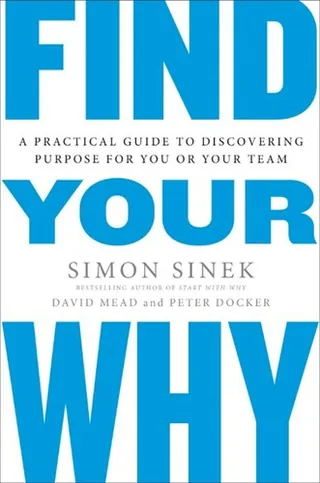
Find Your Why (opens audible.co.uk, external site)
Shaped how I think about an ultimate why, which is how I frame the roles I want to design for.
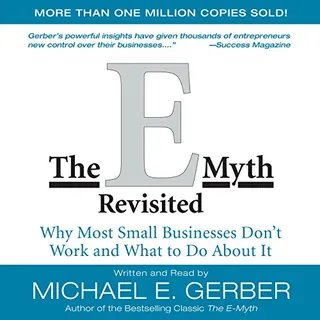
The E-Myth Revisited (opens audible.co.uk, external site)
Shaped how I think about a business as a set of roles that do not all have to be filled by me.
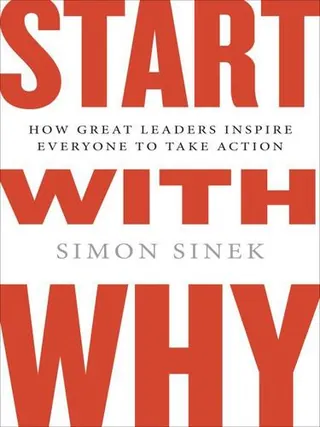
Start with Why (opens audible.co.uk, external site)
Shaped how I think about starting from the purpose a role serves rather than the status it brings.