The argument in brief
- The question
- Am I really focused on the one thing I care about, or spreading my attention across side quests?
- The claim
- Many entrepreneurs reach a point where they have to choose between spreading their attention across several things and doubling down on the one that matters most, and side quests, however worthwhile, can pull you away from the main mission. Confidence: A personal reflection from my own situation in early 2023 and one founder's story. No studies cited.
- The evidence
- My own goals for 2023: deliver a university seminar, launch my book, and release the paid version of Flowtelic.
- Nathan Barry's own account of being told to shut ConvertKit down or take it seriously, and of revenue growing from $1,300 to $130,000 a month in the 15 months after he doubled down.
- The best counter
- One success story doesn't show that doubling down works; we rarely hear from founders who went all in and failed. And some side quests feed the main mission, as I say the book does.
- What would change my mind
- Evidence that founders who keep several projects going do as well as those who commit to one, or that the work I called side quests ended up driving Flowtelic forward.
- Open gaps
- 2 gaps. Statements I haven't verified yet. Each is marked in the text.
The question: Am I really focused on the one thing I care about, or spreading my attention across side quests?Every couple of months I have a call with a couple of great entrepreneur friends where we dissect our current strategies. In the recent chat I shared my success at giving my first university seminar on the Zettelkasten note-taking method. I then explained how I wanted to finish my new Zettelkasten e-book so that I could focus 100% back on Flowtelic.
Three goals for the year
I explained that my goals this year were to achieve three things:
- The first, to deliver the seminar: done.
- The second, to launch the book.
- And the third, to release the paid-for version of Flowtelic so that it can become a proper business.
As we concluded our chat, I felt the burning need to bring up something that had been playing on my mind for a while.
The ConvertKit story
An entrepreneur who I deeply admire is Nathan Barry. I remember when he announced his web app challenge over a decade ago to build a product that could earn $5,000 a month in 6 months.Source: Nathan’s own post setting the goal of $5,000 in recurring revenue a month within six months, with a deadline of 1 July 2013.Starting The Web App Challenge: From Zero to $5,000/month In 6 Months, Nathan Barry, 31 December 2012 That web app was ConvertKit.
All the company metrics were available on Baremetrics, where you could see the success of the company. Unverified: ConvertKit didn’t make $5,000 a month, but $2,800,000 a month.Gap · unchecked figure: ConvertKit's public Baremetrics page no longer exists, so I can't show the $2.8 million figure I saw there in early 2023. This is a huge inspiration for entrepreneurs like me, where I get to truly see what is possible.
What really stuck with me was when Nathan one day shared an inflection point for the company, where he had to decide: let the company die, or go all in. A conversation with Hiten Shah prompted Nathan to either let ConvertKit fail, or double down and build it into a real business.Source: Nathan’s own account. It quotes Hiten Shah’s advice to shut ConvertKit down or give it the time, money and attention it deserves, says his books and courses had taken most of his attention until then, and gives the growth from $1,300 to $130,000 a month within 15 months. It is one founder’s story, told after it worked.Knowing when to quit, Nathan Barry, 1 February 2016
After doubling down, Nathan managed to grow it from $1,300 a month in revenue to $130,000 per month over the next 15 months.
Claim, confidence:my impression, not tested: Many entrepreneurs will face this hard truth. Are you really focused, or are you spreading your attention to try and find the one thing that brings the quickest success?
I can’t stop thinking that Nathan did in fact choose to double down on ConvertKit Unverified: and shut down his other business ventures.Gap · needs evidence: Nathan's post says his books and courses took most of his attention before, but not that he shut them down. I haven't found a source for that part.
My own truth
As I shared this story with my friends on the call, we were left with a moment of silence. A silence where we were all contemplating our own path, our own distractions, our own lack of doubling down.
I know what I want. I want Flowtelic to be a success. I want it to be my contribution to the world to help people think and teach better. But I sit here with the gravity of writing a book: a side quest from the main mission. I sit here with the gravity of spending the last two months preparing for a university seminar: a side quest from the main mission. Will I be distracted by yet another side quest, another distraction from the main mission?
No. More. Side. Quests.
A competing explanation: Not every detour is a distraction. A side project can fund, feed or teach you something for the main one, and I say as much about the book. And one success story doesn’t show that going all in works: we rarely hear from the founders who doubled down and still failed. Timing, the market and Nathan’s existing audience may have mattered as much as focus.I’m committed to delivering this book. I’m excited by it. It’s something that I feel is very important to put out there. It also helps build the flywheel that drives attention to Flowtelic.
But without Flowtelic, there’s no end game. This is my last side quest.
The ah-ha moment
What would change my mind?: Evidence that people who keep several projects going do as well as those who commit to one, or finding that the work I called side quests drove Flowtelic forward more than going all in would have.What is it that you really care about? What are you splitting your attention across? If you had to double down on one thing, what would it be? Be mindful and question if the things you focus your energy on are really moving you towards your goals. If not, do you need to quit the side quests and get back to the main mission?
Sources
- Starting The Web App Challenge: From Zero to $5,000/month In 6 Months, Nathan Barry, 31 December 2012
- Knowing when to quit, Nathan Barry, 1 February 2016
Books behind this essay
Not sources for any claim here. These are books I have finished that shaped how I think about this question. Where I rely on evidence, it is cited in the text.
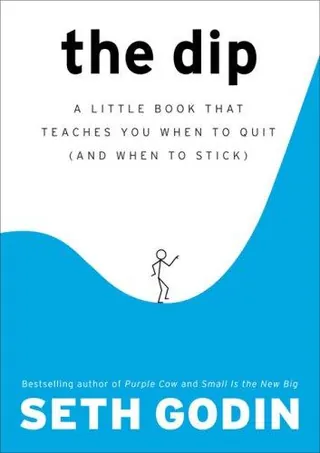
The Dip (opens audible.co.uk, external site)
Shaped how I think about deciding what to quit so that I can push through on the one thing worth finishing.
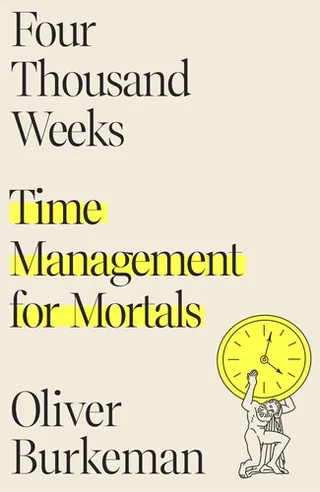
Four Thousand Weeks (opens audible.co.uk, external site)
Shaped how I think about attention being finite, so that saying yes to one thing means saying no to others.
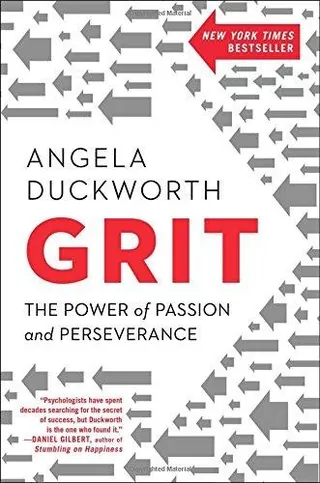
Grit (opens audible.co.uk, external site)
Shaped how I think about staying with one long-term goal rather than chasing the next interesting thing.