The argument in brief
- The question
- Why do goals so often fail to get me where I want to go, and what works better?
- The claim
- Goals alone are a weak way to make things happen: motivation fades before we reach them and stops once we do. A small, frequent system of habits, and an identity to judge decisions by, keeps the work going and lets the results compound. Confidence: A personal reflection from my own experience. No studies are cited.
- The evidence
- My own experience of failing at goal-driven habits, and of writing for 30 minutes a day and keeping Flowtelic going through daily habits.
- James Clear's writing on systems over goals and on identity-based habits, which I summarise. These are his arguments, not studies.
- No data or tested comparison of goal-setting against habit systems.
- The best counter
- Specific, challenging goals may help some people perform, and a deadline can be what gets the system started. The trouble may be goals without a plan, not goals as such.
- What would change my mind
- Good evidence that people who set specific goals follow through and keep going after reaching them as well as, or better than, people who focus on a daily system.
- Open gaps
- 1 gap. Statements I haven't verified yet. Each is marked in the text.
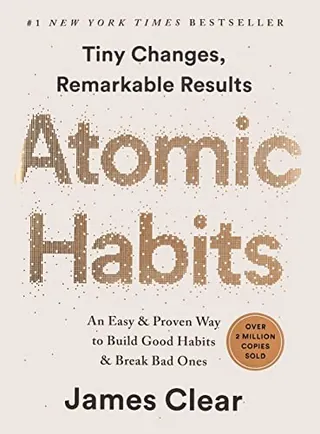
The question: Why do goals so often fail to get me where I want to go, and what works better?As I work on my Atomic Note-Taking book, I start to explore an example of how to process fleeting notes into literature notes. The book I’m using as a reference is Atomic Habits by James Clear.
Limits: “Goal-driven”, “system-driven” and “identity-driven” habits are my labels, not Clear’s. I checked his own article on the idea, not the pages of the book.In this book, he covers the three types of habits: goal-driven habits, system-driven habits and identity-driven habits.Source: Clear describes these as three layers of behaviour change rather than three types of habit: outcomes (what you get), processes (what you do) and identity (what you believe). Habits sit in the process layer.Identity-Based Habits: How to Actually Stick to Your Goals This Year, James Clear
Why goals let me down
Over the years I’ve always attempted goal-driven habits. Where you get to set a goal of achieving a specific thing (and usually by a specific time) and then do what it takes to achieve it.
But I don’t like them. And for good reason. Unverified: They are subject to the Arrival Fallacy.Gap · needs evidence: The term arrival fallacy is usually credited to the psychologist Tal Ben-Shahar, not to Clear, and it usually means expecting that reaching a goal will make us lastingly happy. I haven't checked the original, and my use here is closer to what Clear calls the yo-yo effect. Once you complete a goal, you lose the motivation to continue. What next? What are you doing it for?
But I even fail to reach the goal in the first place. I find that my motivation fades and when faced with the challenge of doing the work, my willpower is nowhere to be seen. This is especially true when external events disrupt my routine, such as travel, sickness or stressful events.
A competing explanation: Specific, challenging goals may help some people perform, and a goal can be what gets a system started. My trouble may have been goals without a plan rather than goals as such.So much so, I genuinely don’t like setting goals because I know they are out of my hands. They are good if you like making wishes, but bad if you actually want the goal to happen.
Systems are what you do
Instead, James Clear talks about system-driven habits.Source: Argues that goals are good for setting a direction but systems are best for making progress, and describes a “yo-yo” effect where people stop once a goal is reached.Forget About Setting Goals. Focus on This Instead., James Clear These are the things you do. Sure, they can have a goal to align what the thing you do is to achieve, but they live beyond the goal. They are a habit. Which means it’s something you do frequently and preferably without friction.
Writing my book is a great example. Sure, I want to write the book and launch it. But I actually focus on the system to achieve it. That’s where I commit to writing for 30 minutes a day to keep things progressing. Not saying that’s easy, and when I do slip, all I need to focus on is resetting and getting back to the habit of 30 minutes a day.
Becoming a writer
Identity-based habits are an extension of this. Rather than saying, I write for 30 minutes a day, I can say, I’m a writer. I take on the traits that a writer takes on. It means I can look at my decisions through that lens. When faced with a decision, I can ask “does this decision align with what a writer would do?”
I’d been experimenting with system-based habit forming for a few years by then. It’s how my app Flowtelic has stayed the course to continue. It’s not been easy to say the least, but rather than look at the mountain to climb, I just look at the action I take today.
It’s doing that where the benefits compound. Claim, confidence:a personal view from my own experience: As the habits become more stable and easy, you get to stack them over time. You get to make the incremental improvements. And, in time, your goals will happen.
The ah-ha moment
What would change my mind?: Good evidence that people who set specific goals follow through, and keep going after reaching them, as well as people who focus on a daily system.Today’s ah-ha moment is to use goals as a way to know what’s important to you, but also think of the systems you need to put into place to do the actions needed to make the goals happen. Think longer term and when your goals complete, don’t stop your habits, continue them and build on the success they provide.
What systems do you think would help you achieve your goals?
Sources
Books behind this essay
Not sources for any claim here. These are books I have finished that shaped how I think about this question. Where I rely on evidence, it is cited in the text.
Atomic Habits (opens audible.co.uk, external site)
Shaped how I think about systems and identity as the levers for change, which is the book this piece is built on.
Habit Stacking (opens audible.co.uk, external site)
Shaped how I think about building on habits once they become stable and easy.
The Achievement Habit (opens audible.co.uk, external site)
Shaped how I think about doing the work rather than wishing for the outcome.