The argument in brief
- The question
- Is happiness a state of things going well, or of things not going badly?
- The claim
- Happiness isn't something you find by adding to your life. It is the result of removing the things that threaten your safety, relationships and control. Confidence: A personal reflection from my own experience. Only the definition of the hedonic treadmill is sourced; the brain chemistry is unchecked.
- The evidence
- My own experience of feeling happiest when I'm in a calm, safe space with the people I love and can look forward to the future.
- The idea of the hedonic treadmill, the observation that people tend to return to a fairly stable level of happiness after good or bad events (Brickman and Campbell, 1971, as summarised on Wikipedia).
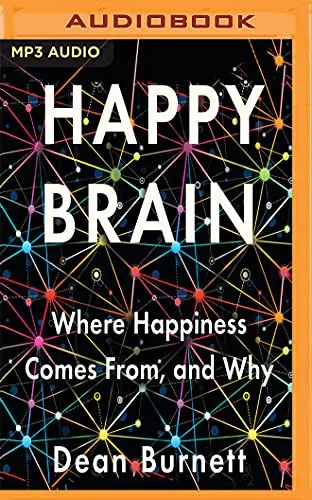
- My reading of The Happy Brain by Dean Burnett, which prompted the piece. I don't cite it for any specific finding.
- The best counter
- People who feel safe and settled can still feel flat or unfulfilled, and some find their deepest happiness in challenge, risk or striving. Removing threats may be necessary without being enough.
- What would change my mind
- If people with secure homes, good relationships and control over their lives were, on the whole, no happier than people without them, or if chasing achievements reliably made people lastingly happier.
- Open gaps
- 3 gaps. Statements I haven't verified yet. Each is marked in the text.
The question: Is happiness a state of things going well, or of things not going badly?On a long car journey I decided to listen to The Happy Brain by neuroscientist Dean Burnett, and boy have I been enjoying it. He asks the very apt question: what is happiness and where can you find it, from a neuroscientist’s point of view, that is.
The short answer is, it’s complicated. The definition of happiness is even questionable, let alone discovering how it exists in the human body. But I have my own thoughts on it, which I want to share in today’s article.
When things don’t go bad
I have this feeling that happiness isn’t a state of things going well, but really a state of when things aren’t going bad.
When things go well, Unverified: you may have an influx of neurotransmitters that express enjoyment (dopamine, serotonin and endorphins). These are temporary experiences and can’t last indefinitely.Gap · needs evidence: I haven't checked this against a source. It simplifies what these chemicals do, and I'm not sure 'temporary' is the right way to describe them.
But when things don’t go well, Unverified: you may have an influx of the stress neurotransmitter adrenaline or the hormone cortisol.Gap · needs evidence: I haven't checked this against a source. Adrenaline acts both as a hormone and as a neurotransmitter, and the stress response is more involved than this.
So my question is, can you be happy when you’re stressed, anxious or unsettled?
Feeling calm
Unverified: When we have few disruptions in our life, we reduce the stress hormones in our bodyGap · needs evidence: This is my understanding, not something I've checked. I haven't found evidence that fewer disruptions lower stress hormones in this way. and allow our mind to relax and not have to continually look out for threats.
This can happen when we have a safe place to be, such as our own home. It’s where we feel comfortable and have privacy from the outside world. It’s where we have the people around us who we love and trust. It’s where we have a job that gives us security for the future. It’s where we have our health and feel like the rug won’t be pulled out from underneath us.
Limits: This is how it is for me. Plenty of people don’t have a safe home, secure work or good health, and I’m not in a position to say what happiness looks like for them.When I’m in this calm, safe space, with the people I love, and can look forward to the future, that’s when I feel most happy.
Not money, success or fame
It’s almost like there’s a conspiracy in life. When we grow up we seem to have a normal desire to be rich (have a good job), successful (get good grades) and in some cases famous (progress through the social ranks). It’s like we’re being told that this is what brings happiness: being successful.
It’s a lie. On some level, it can help remove some stresses (health, shelter, etc). But we see people fall for the trap of chasing happiness by some arbitrary measure of success. They’re stuck on the hedonic treadmill.
The hedonic treadmill
This is a trap where you are continually chasing one pleasure after another. You never feel satiated with your current achievements and continually seek to achieve the next one.
This happens because the surge of happiness after one success drops back to its normal level and you’re left hungry to fill the void with a new one.Source: Describes the hedonic treadmill, or hedonic adaptation, as the idea that people quickly return to a relatively stable level of happiness after major positive or negative events, and credits the term to Philip Brickman and Donald T. Campbell in 1971. It’s an encyclopedia summary, not the original paper, and it supports the idea of a return to a baseline, not my account of why people keep chasing.Hedonic treadmill, Wikipedia
What happiness is about
I’m starting to believe that happiness is about the following:
- Feeling safe: a safe home, being healthy and having no external worries to be a threat
- Being surrounded by healthy relationships: love, family and friends
- Having control over your life: a sense of purpose, autonomy and creativity
To put it simply, it’s that everything is just… ‘ok’ and nothing is pulling you down.
On a personal level, I believe you might have other things that would give you a sense of fulfilment. For me, these are:
- To have interests that give you solvable challenges
- To have purpose that is of service to others
The ah-ha moment
A competing explanation: Feeling safe and settled doesn’t stop some people feeling flat or unfulfilled, and some find their deepest happiness in challenge and striving. Removing threats may be necessary without being enough, which my own list of solvable challenges and purpose hints at.To summarise, the ah-ha moment of this issue is that Claim, confidence:a personal reflection from my own experience; not tested: happiness isn’t something that you seek by adding to your life, but rather is the result of removing the things that threaten your safety, relationships and control.
Sources
- Hedonic treadmill, Wikipedia
Books behind this essay
Not sources for any claim here. These are books I have finished that shaped how I think about this question. Where I rely on evidence, it is cited in the text.
The Happy Brain (opens audible.co.uk, external site)
Shaped how I think about happiness as something hard to define, let alone locate in the brain, which is the question this piece starts from.
Stress-Proof (opens audible.co.uk, external site)
Shaped how I think about stress as something that colours how we feel day to day.
The Craving Mind (opens audible.co.uk, external site)
Shaped how I think about the pull of chasing one reward after another.
Drive (opens audible.co.uk, external site)
Shaped how I think about autonomy and purpose as part of what makes life feel good.