The argument in brief
- The question
- What does my ego actually seek, and how has that shaped the choices I've made in my career?
- The claim
- My ego is fed by a positive feedback loop of knowing my skills are wanted by others. That explains when I feel motivated or dejected, and why I chose strong 'number 2' roles that put my own business on hold. Confidence: A personal reflection based on my own self-observation. No studies are cited.
- The evidence
- My own experience as a former startup CTO, e-commerce specialist, consultant, mentor and YouTuber.
- Noticing that rejected offers to help upset me, while milestones like follower counts feel more like utilities.
- No studies of motivation, ego or career choice.
- The best counter
- Being upset when an offer is rejected may be an ordinary response to rejection of something we care about, not a sign of a particular need for our skills to be wanted. And staying a 'number 2' may have had more to do with risk, money or circumstance than ego.
- What would change my mind
- If I found I felt just as motivated by work nobody saw or relied on, or that rejection stung just as much when no skill of mine was being offered, this explanation would be much weaker.
The question: What does my ego actually seek, and what has that meant for the choices I’ve made?Ego is a curious beast. It drives our motivations and makes us ‘feel’ a certain way when it’s fed a positive or negative interaction. Today though, I’ve had an epiphany and now realise what my ego truly seeks!
I love to help others and inspire them to be creative, take on interesting challenges and overcome things getting in their way. I do this in the form of my consultancy solving technical challenges, or in the form of mentorship to help others find the path to what they want, usually based around entrepreneurial goals as well as career and mindset.
One thing that I’ve always strived for is to gain new skills and use those in the work that I do. Examples of these skills are around programming, design, user experience, leadership and even content marketing.
As a former CTO for a startup, I would bring my skills of video to help communicate, or my skills of design and user experience to help prototype. As an e-commerce specialist I’ve applied my skills of programming to solve interesting user experience challenges. All these skills are a utility to allow me to provide a benefit to others.
My skills and my ego
Limits: I’m reading my own motives from the inside, with nothing to check them against. This is how it looks to me, not a tested explanation.How does this relate to my ego? It turns out that Claim, confidence:a personal reflection; my own self-observation: one of my driving motivators is getting a positive feedback loop of knowing that my skills can be desirable for others to help them. It’s that simple.
As a programmer, I enjoy knowing that my skills have allowed my clients to do some innovative things in cool ways.
As a designer, I enjoy knowing that I can communicate and motivate others to fall in love with the solution and say ‘yes’ to going for interesting challenges and doing something different.
As a YouTuber, I enjoy mentoring and inspiring others to deploy the learnings I’ve had in their own content strategy.
When my ego gets upset
It turns out that when I make an offer to help, I’m setting up an opportunity to get the positive feedback loop to validate the skills that I’ve acquired. This may be to help mentor someone, to be a guest in a podcast and share the interesting learnings I’ve found, or to propose an innovative solution to a problem.
My ego gets upset when my offer to share my skills has been rejected.
A competing explanation: Most people are upset when something they care about is turned down. The sting may be ordinary rejection rather than a particular need for my skills to be wanted.I’m pitching my skills to benefit others, both with a selfless intent, but also a selfish intent of making my ego happy. When the pitch fails to motivate or inspire, my ego disengages. It cuts off that avenue of self-validation and starts to seek it elsewhere. In some cases, when I’m particularly passionate about what I’m pitching, it can cause me to get upset.
Fortunately though, I’m a proponent of a growth mindset and while I can be temporarily upset, I never attribute that to my self-worth. I appreciate that is a privilege that many don’t have and makes me lucky. I may take some time to process it, but it just means I come back with a new strategy.
What my ego doesn’t seek
While I don’t know for sure, I don’t believe my ego seeks fame or money. While these are important, I see them as utilities which can be deployed elsewhere. There is an element of feeling rewarded when you hit milestones, such as YouTube subscribers and Twitter followers, but I feel these are celebrations of the work that achieved them.
For example, aside from having fun conversations with virtual friends on Twitter, the main motivation for gaining lots of followers is to expand my reach from an organic marketing perspective. Simply put, more followers means more potential customers, not that more followers means I’m great. I’m defining a customer as someone who benefits from the skills I have (thus feeding my ego), which doesn’t necessarily have to be a paying customer.
I like to think I keep my motivations in check and that I’m doing it for the greater good and not the self-worth. I want to be someone who does something and plays a role in society. I don’t want to be someone who receives attention just because of who I am.
How it shaped my career
I’ve often felt that I’m a great ‘number 2’, where I perform best when I’m relied upon by someone else who makes all the decisions. I get to be the dependable person who can solve problems.
I’m at the point where I’m transitioning to being the ‘number 1’ by running my own company. This is where I make the decisions and I’m responsible for the outcome of the performance.
But choosing roles where I’ve been a strong ‘number 2’ (CTO to the CEO, for example) makes complete sense with this ego motivation in mind. I get to use my skills on interesting challenges, which gets positive feedback from the person in charge and the team around.
In some way, it’s kept me risk averse to doing my own thing. I love side projects and exploring new things, but this is my way of gaining new skills which I can then use on interesting challenges to get a positive feedback loop.
Is it good or bad?
Knowing what’s going on is good, as I can then question whether the decisions I make to feed my ego are in my long-term goals or not.
As for whether it has been good or bad, I would say it’s been good to a point, having a great career, but bad to the point of running my own business. I’ve been depended on in the roles I’ve had, which has put my own longer-term plans on hold.
The epiphany
Seeing my ego through this lens has been enlightening. It matches the times I’ve felt strongly motivated, because the payoff to feed the ego was great, but also the times I’ve felt dejected, because the payoff failed. This is relieving. It is what it is. Coming to this realisation puts me back in control. That can only be a good thing.
Do you know what drives your ego?
Books behind this essay
Not sources for any claim here. These are books I have finished that shaped how I think about this question. Where I rely on evidence, it is cited in the text.
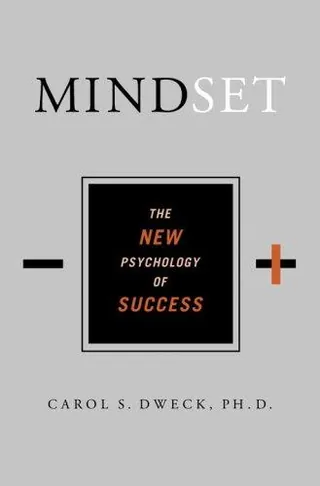
Mindset (opens audible.co.uk, external site)
Shaped how I think about keeping a setback separate from my sense of self-worth, which is the growth mindset I mention here.
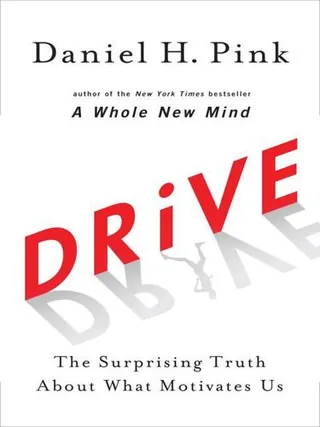
Drive (opens audible.co.uk, external site)
Shaped how I think about what really motivates us beyond money and recognition.
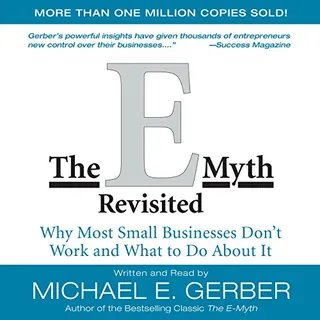
The E-Myth Revisited (opens audible.co.uk, external site)
Shaped how I think about the step from being the dependable technician to running my own business.