The argument in brief
- The question
- Is it worth starting something before I know how it will turn out?
- The claim
- Starting things, in a direction you care about, increases your chances of luck and teaches you skills you carry forward, even when the thing itself doesn't succeed as you imagined. Confidence: A personal view from my own experience, stated firmly. No studies are cited.
- The evidence
- Four examples from my own work up to 2022: a daily vlog, a Zettelkasten video, an early app release that led to a waitlist, and side projects that shaped my career.
- A line from a Rhett and Link interview on Colin and Samir’s channel that prompted the piece, linked as a source.
- No studies or data beyond my own figures.
- The best counter
- I only list the starts that went somewhere. Starting many things also has costs in time, focus and money, and some people would do better finishing fewer things.
- What would change my mind
- Evidence that people who start many small projects are no luckier or more skilled over time than people who plan carefully and start fewer, or a fair count of my own starts that gave me nothing.
The question: Is it worth starting something before I know how it will turn out?In a recent interview with veteran YouTubers Rhett and Link, Rhett says the phrase “You always gain something just by beginning something”.Source: The interview where Rhett says this, from about 4:49.The Full Story of Rhett & Link, Colin and Samir (YouTube)
However, it’s the following part that is really interesting. He goes on to say that it never ends up succeeding how you imagine it would, but it morphs into something else.Source: The same interview, straight after; my paraphrase of what Rhett goes on to say.The Full Story of Rhett & Link, Colin and Samir (YouTube)
This gave me pause to think. I believe what he’s saying is way more profound than it first appears. As I reflect on my successes, they are often born out of me starting something.
Waiting for every answer to be yes
When you consider starting something new, or challenging yourself, you start to evaluate all the different aspects of it. Will I be any good, will I have time for it, what will other people think, is it the right (dare I say, perfect) idea, will I enjoy it. The list goes on and on.
An assumption: I am assuming the questions we ask before starting are mostly a reason to delay. Some of them, like whether I have the time or money, are worth answering first.You can paralyse yourself waiting for all those answers to be “yes”, but Claim, confidence:a personal view, stated firmly: that will never happen. You will never have the perfect moment to start something.
I believe it’s better to have a why: a general direction of something you feel is important and bigger than yourself. Then it makes it easier to try new things in that direction, learn a ton of new skills and insights, and maximise your opportunity for luck and finding what you really enjoy doing.
You will never predict how it will turn out, but it will be better than never starting, that’s for sure. There is no failure in trying things, but a whole load of learning with a sprinkle of accidental success.
Things I started that went somewhere unexpected
Limits: These are four examples from one person, and I chose them because they went somewhere. I didn’t keep a count of the starts that gave me little.Let me illustrate with examples from my own journey. I didn’t have any expectations of what would happen. I just started something.
My YouTube journey
In 2016 I was creatively frustrated due to work commitments. I picked up my camera one day and committed to making 10 daily vlogs. I didn’t make 10 videos, I made 130.
While this chapter of my YouTube journey was a “failure”, only reaching 350 subscribers, it gave me the following:
- Confidence on camera
- An understanding of the YouTube platform and creator mindset
- Video production and editing experience
This I carry forward with my career.
Accidental Zettelkasten teacher
I started to explore the Zettelkasten note-taking method after reading How to Take Smart Notes, and in a reply to a tweet I made a graphic explaining my thinking. I didn’t think much of it.
Then I started something. I made a video explaining what this graphic means. Little did I know, this video would go on to get 100K+ views and earn over £400 in advertising revenue.
This changed my YouTube trajectory: by the time I wrote this, in late 2022, I was at 8,000 subscribers and well known in the Zettelkasten and note-taking space.
3,000 people on my app waitlist
In 2021 I forced myself to release an early version of the note-taking app I’m building. I just wanted to release something. Then on a Hacker News thread I shared what I was working on. I didn’t think much of it. Then one person asked if I was collecting email signups. So I set that up, and by the time I wrote this, in late 2022, around 3,000 people had joined the waitlist for Flowtelic.
Flowtelic waitlist sign-ups, 2019 to September 2022
6 Sep 2022about 3,010sign-ups
Describe this animation
A line chart of the total number of people on the Flowtelic waitlist, from January 2019 to 6 September 2022. The values are traced from a screenshot of the waitlist sign-up chart, mostly read at the start of each month, so they are approximate.
- January 2019 to January 2021: the line is flat at zero.
- February 2021: a dashed marker shows when the app was shared on Hacker News. The line starts to rise around here: about 20 at the start of February, 200 by April and 600 by July 2021.
- The rise is fastest through the second half of 2021: about 890 in August, 1,350 in October and 1,770 in December.
- It keeps climbing through 2022, a little more slowly: about 1,980 in January, 2,530 in April and 2,880 in July.
- Mid-August 2022: a small dip, from about 2,980 to about 2,920.
- 6 September 2022, the end of the line: just over 3,000.
The animation draws the line from left to right once, with a dot and a reading that follow it. Afterwards you can move along the line with the slider (or by pointing at the chart) to read the month and the approximate total.
A happy accident because I shared what I was working on.
My career
I got a job at IBM in part due to having experience trying to make a feature film that completely failed. It showed resilience in trying new things.
The work I do today is a result of me starting countless failed side projects, where I learned the ins and outs of the technology. All these projects have been instrumental in me gaining the skills to progress my career.
Starting makes room for luck
A competing explanation: I only see the starts that worked out. Starting many things also costs time, focus and money, and some people would do better finishing fewer things well. My examples can’t tell the two apart.Success is a result of luck plus opportunity. Claim, confidence:a personal view from my own experience; no studies cited: You increase your opportunity to be lucky by starting things and seeing where the wind takes you. It won’t be where you think you’ll be, but you’ll be more experienced, more confident and more lucky.
You always gain something by beginning something.
What would change my mind?: Evidence that people who start many small projects are no luckier or more skilled over time than people who plan carefully and start fewer, or an honest count of my own starts that gave me nothing.So go start something today.
Sources
- The Full Story of Rhett & Link, Colin and Samir (YouTube)
- The Full Story of Rhett & Link, Colin and Samir (YouTube)
Books behind this essay
Not sources for any claim here. These are books I have finished that shaped how I think about this question. Where I rely on evidence, it is cited in the text.
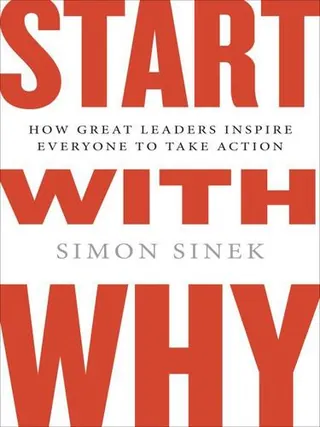
Start with Why (opens audible.co.uk, external site)
Shaped how I think about having a general direction that is bigger than any single project.
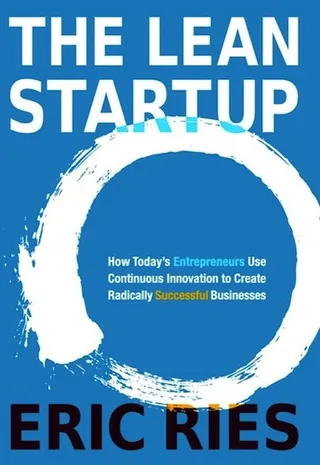
The Lean Startup (opens audible.co.uk, external site)
Shaped how I think about releasing something early and learning from what happens next.
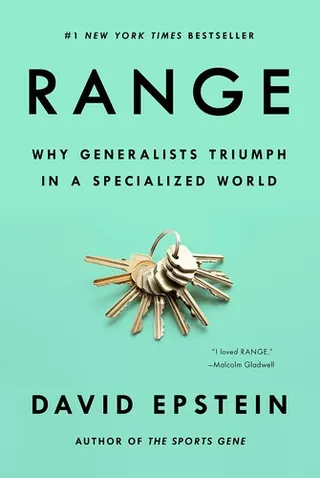
Range (opens audible.co.uk, external site)
Shaped how I think about trying many things and carrying what I learn from one into another.
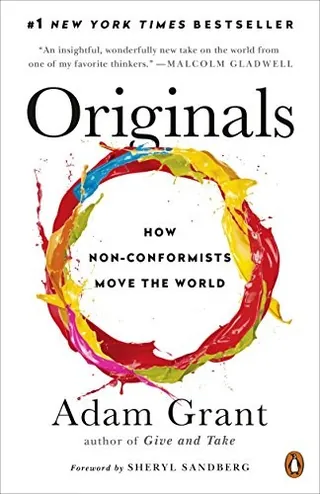
Originals (opens audible.co.uk, external site)
Shaped how I think about trying ideas before feeling sure of them.