The argument in brief
- The question
- What does hard work look like if it is sustained over years rather than pushed into one?
- The claim
- Hard work is worth giving yourself permission for when it is consistent, focused and patient over the long term, supported by strategic thinking and a clear why, and kept within reasonable limits. Confidence: A personal view from my own working life. No studies cited.
- The evidence
- My own experience: starting work the day after my school exams, building a business with my brother at weekends while a graduate at IBM, and by 2023 being in year three of building Flowtelic.
- A saying about overestimating one year and underestimating ten, often attributed to Bill Gates; its earliest known form is anonymous, printed by J. C. R. Licklider in 1965.
- The best counter
- Long hours late at night have costs that are easy to miss from the inside, such as sleep, health and judgement. Much long-term success may come from luck, timing or strategy rather than the hours put in.
- What would change my mind
- Finding that my evening work was producing less than more rest and fewer hours would, or that it was costing the people around me more than I can see.
The question: What does hard work look like if it is sustained over years rather than pushed into one?There is a saying, often attributed to Bill Gates, that has come into my awareness a couple of times recently:Source: Traces the saying. Gates used versions of it in his 1996 and 1999 books, but the earliest known match is anonymous: J. C. R. Licklider printed it in Libraries of the Future (1965) as a modern maxim and disclaimed credit. The origin remains unclear.Quote Origin: People Tend To Overestimate What Can Be Done in One Year, Garson O'Toole, Quote Investigator, 3 January 2019, updated 21 September 2024
Most people overestimate what they can do in one year and underestimate what they can do in ten years.
It made me think of hard work and the value of sticking at something over the long term.
Three ideas of hard work
I’m old enough now to know what traditional hard work looks like, where you stick at the same job until you retire. I’m old enough to know what the Grant Cardone of hustle culture looks like: “go big or go home”. And I’m now observing the anti-hustle culture mindset, where you shouldn’t do more than you need to.
An assumption: I am assuming that a challenge just out of reach, given intense focus, is achievable with enough time. Some challenges are out of reach for reasons effort doesn’t change.I don’t make choices for other people. But I do believe in hard work. Claim, confidence:a personal view from my own experience: I believe in hard work where you get to set yourself a challenge that is just out of reach and where you can give intense focus, and over time, achieve it.
In my DNA
It’s in my DNA. When I finished my high school exams on a Thursday, I was in work on a Friday. When I was a graduate at IBM, I was building a business with my brother at weekends, which after 19 years is my day job.
When I now look at the challenge I have with building Flowtelic, I have accepted that it’s going to take a lot of sacrifice, a lot of hard work, and a lot of time. I’m already into year three of this journey and I still feel like I’m at the foot of the mountain.
In a way, I want my legacy to be where someone looks at what I’ve achieved and thinks it’s voodoo magic. I want to be someone who will do the hard thing, and go further than any other person is prepared to go in order to solve “this” problem. However, I want to do it with reasonable sacrifice and great strategic excellence behind the scenes.
When the lights go out
This means I will be there taking my kids to school. I will be there at their swimming lessons. I will be there to play with them. I will be there to read their bedtime story and say goodnight.
A competing explanation: Working once the lights go out has its own costs, to sleep, health and judgement, that are easy to miss from the inside. And much of what looks like the reward of hard work may come from luck, timing or strategy rather than the hours.But when the lights go out, I get to work. Hard work for me is about consistency, and the exact use of my 25 years of expertise. It’s about paying attention to the things I need to learn as I go about my day, so that when the sun sets, I can maximise the output by putting that skill to use.
But it’s also about accepting that I can always do more, but I do have limits. It’s about saying no to the things that distract from the mission. And it’s about being patient.
This is why I don’t fear someone else taking my ideas. If they were obsessed enough to put the hard work in, they would have their own ideas fuelling that obsession.
The ah-ha moment
What would change my mind?: If I found my evening work producing less than more rest and fewer hours would, or costing the people around me more than I can see.The ah-ha moment is giving yourself permission to work hard. But make sure you give yourself the head space to work smart, and with some strategic thinking supporting it. It helps when you have a why so that you know what your just cause is.
Create the illusion of doing what others think is impossible.
Sources
- Quote Origin: People Tend To Overestimate What Can Be Done in One Year, Garson O'Toole, Quote Investigator, 3 January 2019, updated 21 September 2024
Books behind this essay
Not sources for any claim here. These are books I have finished that shaped how I think about this question. Where I rely on evidence, it is cited in the text.
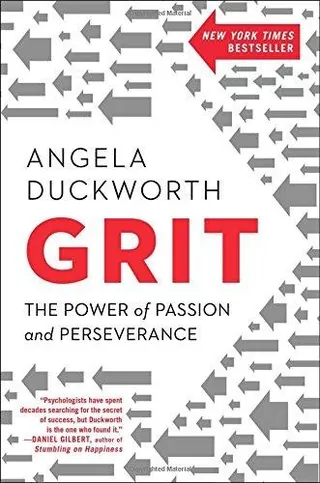
Grit (opens audible.co.uk, external site)
Shaped how I think about sticking at a hard challenge over years rather than months.
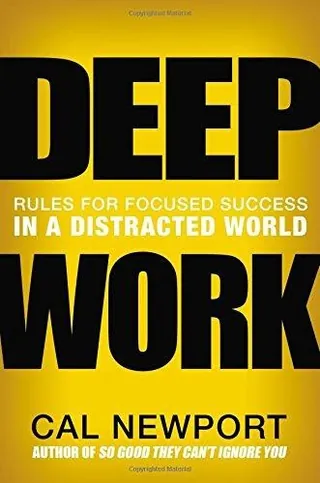
Deep Work (opens audible.co.uk, external site)
Shaped how I think about intense focus as the part of hard work that matters most.
The Infinite Game (opens audible.co.uk, external site)
Shaped how I think about having a just cause that makes long, patient work worth it.